
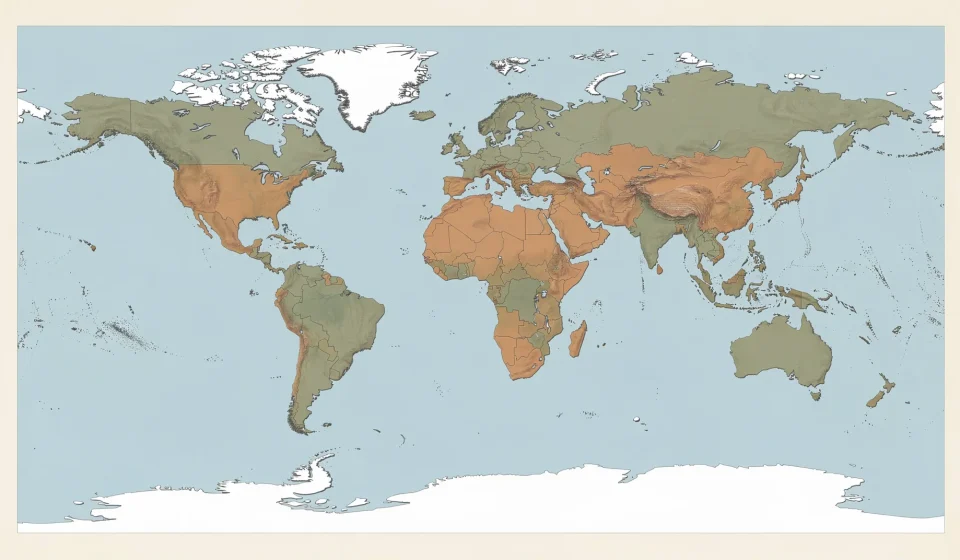

Deserts cover roughly a third of Earth’s land surface. The deserts of the world map below groups them by continent. It ends with the one continent where ice itself defines the terrain, the largest desert on Earth.
Table Of Content
- What This Deserts of the World Map Covers
- The Seven Continents on This Map
- Why This Atlas Exists
- Using the Atlas Alongside the Country Hub
- An Honest Scope Note
- How These Entries Were Selected
- What Makes an Entry Atlas-Worthy
- Related Categories
- FAQ
- How much of Earth’s land is desert?
- Does every continent have a desert?
- Why do most of the world’s deserts cluster around similar latitudes?
- Will Desert Booker eventually cover all nineteen non-launch countries in full trip-planning depth?
- Is this atlas a complete list of every desert on Earth?
- Why does a small desert like Tabernas get its own entry alongside giants like the Sahara?
What This Deserts of the World Map Covers
This atlas organizes named deserts by continent. Each entry offers a short, factual profile, and links down to the matching Desert Booker Country Hub page where one exists. Where no Country Hub page exists yet, the entry stands on its own as a reference. Britannica’s overview of desert geography confirms the rough one-third figure, and notes that most of the world’s deserts cluster in a band roughly 20 to 35 degrees from the equator, with a smaller cluster of cold deserts sitting further out. The sections below trace that pattern continent by continent.
The Seven Continents on This Map

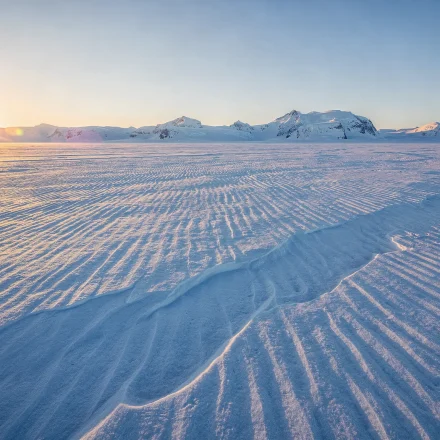
Deserts of Africa covers the Sahara, the Namib, and the Kalahari. Deserts of Asia spans the Gobi, the Thar, and the Kyzylkum. The Deserts of the Middle East entry brings together the Rub’ al Khali, Wadi Rum, the Negev, and Qatar’s Khor Al Adaid. Across the Americas, Deserts of the Americas covers the Atacama, Peru’s Ica and Huacachina region, and North America’s Sonoran, Mojave, Great Basin, and Chihuahuan deserts. Deserts of Australia & Oceania covers the Great Victoria Desert and the Red Centre. Europe’s only true desert, Tabernas, gets its own entry under Deserts of Europe. Polar Deserts closes the list with Antarctica and the Arctic, the two largest deserts on Earth by area.
Why This Atlas Exists

Every named desert in this atlas traces back to one of the five formation mechanisms covered in How Deserts Form. This atlas is where that mechanism-level science meets specific, real-world geography. Reading an entry here alongside its formation mechanism adds real depth. A reader learns not just where the Atacama sits, but why it counts as the driest non-polar desert on Earth, and why that same mechanism also shapes the Namib Desert half a world away.
Using the Atlas Alongside the Country Hub
Where a launch-country Country Hub page exists, this atlas links straight to it for full trip-planning depth: accommodation, logistics, seasonal timing, and experience content. Where no Country Hub page exists yet, the atlas still offers a genuinely useful, accurate reference profile. It simply isn’t built out into bookable trip content yet.
An Honest Scope Note

Desert Booker’s Country Hub currently covers five launch destinations in full trip-planning depth: the UAE, Australia, Morocco, Namibia, and Oman. This atlas additionally documents nineteen more countries’ deserts at an encyclopedic, reference level. That content is genuinely useful geography, not yet built out as travel-package content. Where a Country Hub page exists, this atlas links directly to it.
How These Entries Were Selected
Editors chose the deserts profiled in each continent topic using three criteria: scale, meaning the largest or most distinctive example; relevance to Desert Booker’s launch destinations; and encyclopedic completeness. This atlas isn’t an exhaustive list of every arid region on Earth. It’s a curated set of the deserts most worth knowing by name. Within each continent entry, priority went to the desert most likely to already carry name recognition, such as the Sahara, the Gobi, or the Atacama, alongside at least one less-familiar but scientifically notable inclusion, such as Tabernas or the polar deserts.
What Makes an Entry Atlas-Worthy

Raw size alone doesn’t earn a desert its place here. An entry also needs to illustrate a formation mechanism clearly, connect to one of Desert Booker’s launch or near-launch destinations, or carry a fact distinctive enough to remember on its own. That combination of criteria explains why a small desert like Tabernas sits alongside continent-spanning giants like the Sahara without feeling out of place. It also explains why the polar deserts close out the atlas rather than open it. They work best as a payoff, once a reader already holds the more familiar hot-desert entries in mind for contrast.
Related Categories
How Deserts Form · Desert Definition & Classification · Desert Geology & Landforms
FAQ
How much of Earth’s land is desert?
Commonly cited estimates put the figure at roughly a third of Earth’s total land surface, the same figure this deserts of the world map reflects. The exact percentage depends on which classification threshold and desert types get included in the count.
Does every continent have a desert?
All seven continents have desert or polar-desert terrain, including Antarctica. Antarctica stands out as the only continent that counts, in its entirety, as one enormous desert.
Why do most of the world’s deserts cluster around similar latitudes?
Most sit in a band roughly 20 to 35 degrees from the equator. That’s where the mechanism covered in Subtropical High-Pressure Deserts operates most consistently. A separate, smaller cluster of cold deserts forms further from the equator, through different mechanisms.
Will Desert Booker eventually cover all nineteen non-launch countries in full trip-planning depth?
This atlas keeps them as accurate encyclopedic references for now. Whether any expand into full Country Hub coverage depends on future business decisions beyond this Hub’s current scope.
Is this atlas a complete list of every desert on Earth?
No. It’s a curated selection that prioritizes scale, relevance to Desert Booker’s launch destinations, and genuine encyclopedic interest, not an exhaustive geographic inventory.
Why does a small desert like Tabernas get its own entry alongside giants like the Sahara?
Size isn’t the only selection criterion here. Tabernas earned its place through genuine curiosity value, and through how clearly it illustrates that desert classification applies regardless of popular expectations about a region.