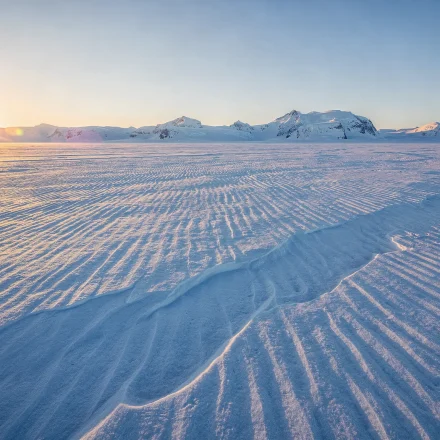

Australia is genuinely one of the most desert-dominated continents on Earth relative to its size. Arid and semi-arid land covers a substantial majority of its total area.
Table Of Content
- The Great Victoria Desert
- The Red Centre & Uluru-Kata Tjuta
- Why Australia’s Deserts Look Distinctive
- How Australia’s Desert Coverage Compares Globally
- Why Australia’s Desert Geography Connects Directly to This Hub
- How Australia’s Deserts Compare to the Sahara at a Similar Latitude
- Beyond the Mainland: Oceania’s Smaller Arid Zones
- Related Topics
- FAQ
- What percentage of Australia is desert or arid land?
- Why is so much of Australia’s desert terrain red in color?
- Why do different sources cite slightly different sizes for the Great Victoria Desert?
- Does Australia’s high proportion of desert land actually affect national policy?
- Why do the Great Victoria Desert and the Sahara look so climatically similar despite being on opposite sides of the world?
The Great Victoria Desert
According to Geoscience Australia, the Great Victoria Desert covers roughly 348,750 square kilometers, about 134,650 square miles. That’s 4.5 percent of the entire Australian continent, making it Australia’s largest desert by a considerable margin. It formed largely through the subtropical high-pressure mechanism covered in Subtropical High-Pressure Deserts, the same broad mechanism behind the Sahara and Arabian Desert at a comparable southern-hemisphere latitude. Different sources cite different sizes for the desert, too. That gap traces to differing conventions for where its boundary gets drawn against neighboring arid regions, not to any real disagreement about its status as Australia’s largest.
The Red Centre & Uluru-Kata Tjuta

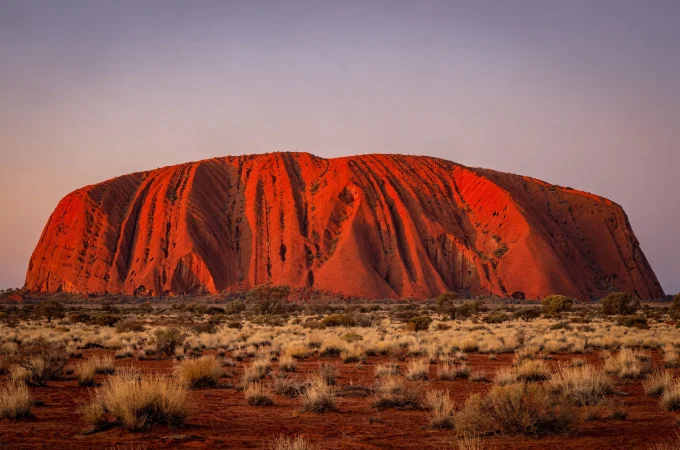
Australia’s Red Centre region is home to the iconic sandstone formations of Uluru and Kata Tjuta. It sits within the country’s broader arid interior, and it’s among the most internationally recognized desert landmarks on Earth: a genuinely global symbol of Australian desert terrain specifically. See Australia’s Country Hub for this region covered in full trip-planning depth.

Why Australia’s Deserts Look Distinctive
Australia’s characteristic red desert coloration comes from iron oxide, or rust, coating individual sand and rock particles. It’s a genuine geological pigmentation process, not an artifact of photography or lighting. This coloration gives much of the country’s arid interior its distinctive color. It’s also consistent enough across the continent’s arid interior that it works as a visual signature, distinguishing Australian desert photography from that of most other continents in this atlas.
How Australia’s Desert Coverage Compares Globally
Few inhabited continents show as large a proportion of arid and semi-arid land relative to total area as Australia does. That fact shapes national water policy, agriculture, and settlement patterns considerably more than in most other countries profiled in this atlas, where desert terrain occupies a smaller share of the national footprint.
Why Australia’s Desert Geography Connects Directly to This Hub
Australia is one of Desert Booker’s five launch countries. As a result, its desert geography carries direct trip-planning relevance beyond this atlas’s general reference value. The Red Centre specifically anchors a substantial portion of the existing Australia Country Hub content.
How Australia’s Deserts Compare to the Sahara at a Similar Latitude
Both the Great Victoria Desert and the Sahara form through the same broad subtropical high-pressure mechanism, at comparable distances from the equator on opposite hemispheres. That’s a useful real-world illustration of how one atmospheric process produces similar desert belts, independent of which specific continent it acts on.
The main visible difference between the two comes down to terrain and geology, though, rather than climate mechanism. Australia’s ancient, heavily weathered landscape and iron-rich soil produce a very different color and texture than the Sahara’s younger sediment and larger sand-sea coverage, even though both experience broadly similar rainfall patterns.
Beyond the Mainland: Oceania’s Smaller Arid Zones
Beyond Australia’s continental interior, parts of the wider Oceania region show smaller-scale arid conditions. Local rain-shadow effects from volcanic terrain shape these zones, and they’re considerably less extensive than the Great Victoria Desert. Still, they’re a reminder that aridity in this part of the world isn’t confined to the Australian mainland alone. Australia’s own desert interior, though, remains by far the region’s dominant and most-visited example.
Related Topics
Subtropical High-Pressure Deserts · World Deserts Atlas · How Deserts Form
FAQ
What percentage of Australia is desert or arid land?
Estimates commonly put arid and semi-arid land at around 70 percent of the continent’s total area. That makes Australia one of the most desert-dominated inhabited continents, proportionally.
Why is so much of Australia’s desert terrain red in color?
Iron oxide coating individual sand and rock grains produces the characteristic red-orange color across much of the country’s arid interior. It’s a genuine mineralogical process, not a visual effect.
Why do different sources cite slightly different sizes for the Great Victoria Desert?
The discrepancy traces to differing conventions for where the desert’s boundary is drawn against neighboring arid regions. It’s not a sign of any real disagreement about its status as Australia’s largest desert.
Does Australia’s high proportion of desert land actually affect national policy?
Yes. The sheer scale of arid and semi-arid terrain shapes water management, agricultural planning, and settlement patterns considerably more directly than in most other countries covered in this atlas.
Why do the Great Victoria Desert and the Sahara look so climatically similar despite being on opposite sides of the world?
Both form through the same subtropical high-pressure mechanism, at comparable latitudes in their respective hemispheres. It’s a clear example of one atmospheric process producing similar desert belts on entirely different continents.