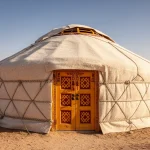
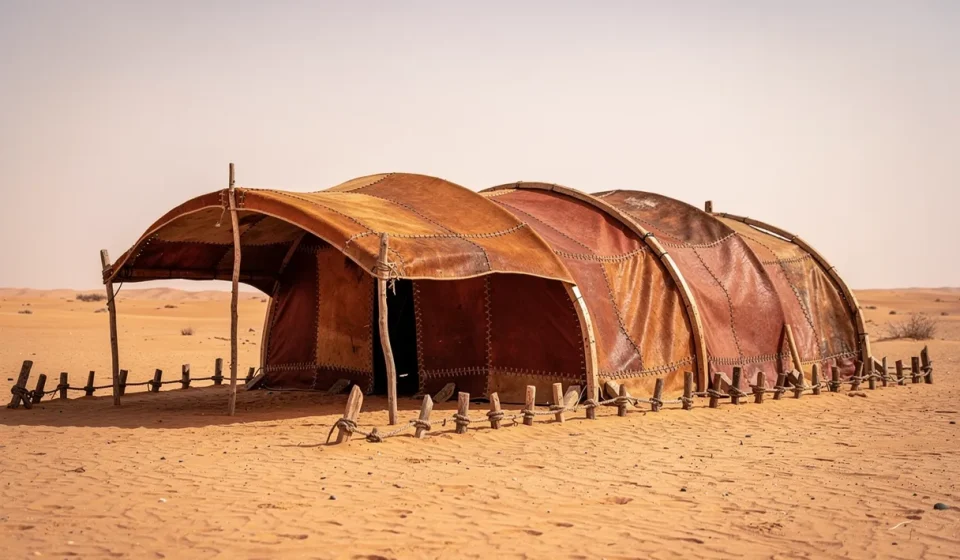

A traditional portable desert dwelling is not one thing. Bedouin goat-hair and Central Asian felt take most of the attention, yet the deserts of North and West Africa hold their own building traditions, and those reach for entirely different materials.
Table Of Content
- What Counts as a Traditional Portable Desert Dwelling
- The Tuareg Tent, and What Red-Dyed Skin Tells You
- Why Materials Follow the Land
- What Modern Substitution Changed
- Traditions This Hub Has Not Documented Yet
- What Would Earn a Tradition Its Own Entry
- Can You Actually Stay in One?
- How These Compare to a Modern Camp Tent
- FAQ
- What is a traditional portable desert dwelling?
- What is a Tuareg tent made from?
- Why do different desert traditions use different materials?
- Are there other nomadic dwelling traditions worth knowing?
- Can I book a stay in one of these shelters?
- How can I tell a genuine shelter from a themed copy?
What Counts as a Traditional Portable Desert Dwelling
Three tests separate a living tradition from a themed reproduction.
First, the structure has to come apart and travel, because that is what portable means in practice. Second, the materials should come from the surrounding land rather than a supplier catalogue. Third, a real community must have built and used it, whether today or within documented history.
Britannica traces the tent back to a portable shelter of poles and covering material. However, the covering is where regional identity actually lives.
The Tuareg Tent, and What Red-Dyed Skin Tells You

Britannica describes the Tuareg as Berber-speaking pastoralists spread across Algeria, Libya, Niger, Mali and northern Nigeria. Northern groups live in true desert, while southern groups occupy steppe and savanna.
Their conventional dwelling, according to the same entry, is a tent of red-dyed skin.
That single detail carries a lot. Skin means livestock, so the shelter comes directly from the herd that makes the migration possible in the first place. Meanwhile the dyeing marks it as something made rather than merely assembled.
Why Materials Follow the Land

Set the three best-documented desert traditions side by side and a pattern appears immediately.
Bedouin weavers use goat and camel hair, because their herds provide it. Central Asian makers use sheep-wool felt, since their pasture supports large flocks. Saharan groups reach for hide, and in palm-growing districts they weave mats instead.
None of those choices is arbitrary. Each one follows what the ground around the camp actually produces, which is precisely why a tradition cannot simply be picked up and relocated.
What Modern Substitution Changed
Britannica adds a detail that romantic accounts usually leave out. By the later twentieth century, plastic sheeting had begun replacing skin on many Tuareg tents.
That is worth sitting with for a moment. Plastic is cheaper, lighter and far easier to source, so the substitution makes obvious practical sense for the families using it.
Still, it breaks the material link that defined the form. A shelter under sheeting keeps the shape and the function while losing the craft, and anyone booking for the tradition deserves to know the difference exists.
Traditions This Hub Has Not Documented Yet
Now the honest part.
Beyond the Bedouin tent and the yurt, this Hub has not yet documented a third tradition to the same standard. Pastoralist communities across the Maghreb and the Horn of Africa maintain their own portable forms, and several have been studied properly by anthropologists.
However, published detail on construction, materials and current practice varies enormously between them. Rather than fill the gap with a plausible-sounding summary, this page names the gap and leaves it open.
What Would Earn a Tradition Its Own Entry
Four things, and all four have to hold at once.
A named community, documented currently or historically. A specific construction method, described in enough detail to check. Materials tied to a real place and a real economy. Finally, a source that is not simply another travel article repeating the same paragraph.
Both existing entries clear that bar comfortably. UNESCO lists yurt-making as intangible cultural heritage, for instance, which provides independent grounding that no blog post can match.
Can You Actually Stay in One?
Not through the destinations this Hub covers, and saying so plainly matters more than a sale.
Tuareg territory sits mainly across Algeria, Libya, Mali and Niger, all outside the current country list. Meanwhile the camps you can book work from the traditions already documented in the tented camp class, or from modern designs within the wider group of mobile and temporary structures.
So if a property advertises a rare nomadic dwelling type, ask which community built it and from what material. A confident, specific answer is the entire test.
How These Compare to a Modern Camp Tent
Against a classic safari tent, a traditional shelter trades comfort for connection.
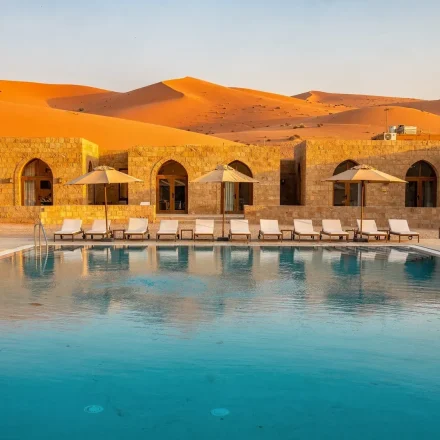
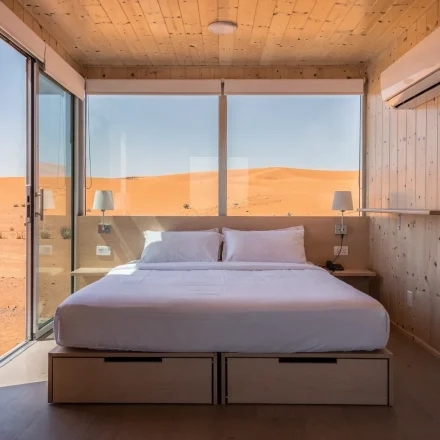
Ceiling height drops, furniture disappears and services vanish. In exchange, the structure tells you something true about the people and the ground it came from, which a manufactured tent never can.
Neither choice is wrong. They simply answer different questions, and knowing which question you are asking prevents most disappointment.
FAQ
What is a traditional portable desert dwelling?
Any shelter built by a nomadic community to come apart and travel, using materials from the surrounding land. Bedouin goat-hair tents and Central Asian yurts are the two best documented, though several other traditions exist.
What is a Tuareg tent made from?
Traditionally red-dyed animal skin, according to Britannica. In palm-growing areas, woven fibre mats serve the same purpose, and since the later twentieth century plastic sheeting has replaced skin in many cases.
Why do different desert traditions use different materials?
Because each one uses what its own land produces. Herds supply hair and hide, flocks supply wool for felt, and palm groves supply fibre for mats.
Are there other nomadic dwelling traditions worth knowing?
Yes, across the Maghreb and the Horn of Africa in particular. However, the published detail varies widely, so this Hub documents a tradition only once construction and community can both be checked.
Can I book a stay in one of these shelters?
Not through the destinations covered here, since most of these traditions sit outside the current country list. Where a property does claim one, ask which community built it and from what.
How can I tell a genuine shelter from a themed copy?
Ask about the covering rather than the shape. A real answer names a specific material and a specific community, while a themed reproduction usually offers neither.