
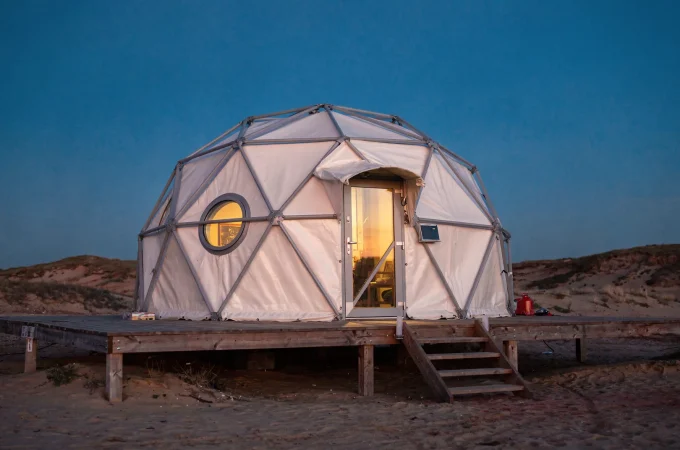
A desert dome camp is a camp where guests sleep in dome-shaped rooms, usually built on a geodesic frame of triangular struts. The domes keep out wind and sand, hold a bed and often include a private bathroom. This guide explains how a dome stay works, how it handles desert heat and wind, and who it suits.
Table Of Content
- What Is a Desert Dome Camp?
- How a Geodesic Dome Is Built
- Heat, Wind and Sand: How Domes Cope
- Inside a Dome Stay: Beds, Bathrooms and Light
- Who a Dome Stay Suits and Who Should Skip It
- FAQ
- What is a desert dome camp?
- Is a dome the same as a bubble tent?
- Are desert domes hot in summer?
- Can a dome handle wind and sand?
- Do dome rooms have private bathrooms?
What Is a Desert Dome Camp?
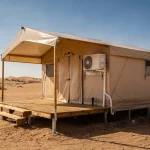
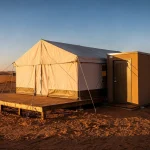
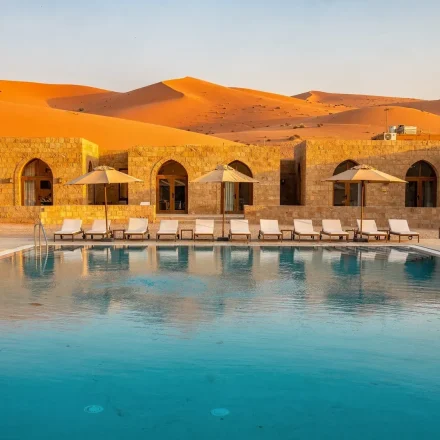
A dome camp groups several dome rooms on a patch of desert. Each dome works like a small cabin with a round shape. A fabric or panel skin covers the frame, and a door and window let in light and air. Some camps add a deck at the entrance, so guests can sit outside at sunset.
Domes are not all the same. A geodesic dome has a visible lattice of struts, while a frameless bubble tent holds its shape with air and has no struts at all. This guide covers the frame type. For the frameless type, read bubble tent in the desert.
The idea comes from the geodesic dome, a structure of triangles. It spreads load across the whole shell, and architect Buckminster Fuller popularised it.
How a Geodesic Dome Is Built

A geodesic dome starts with a frame. Workers join steel or aluminium struts into triangles, and the triangles form a rounded shell. Because the load spreads across many joints, the frame stays stiff with fewer parts than a box-shaped room of the same size.
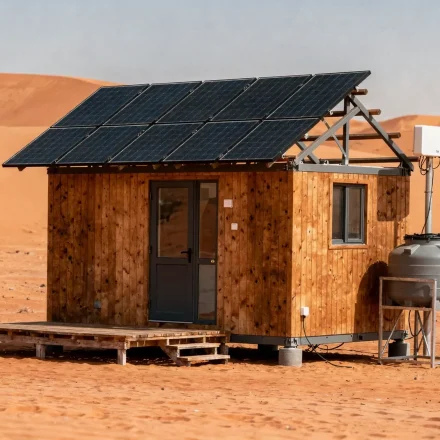
Next comes the skin. Camps use tight PVC or canvas, and some use rigid panels for harder weather. A floor platform lifts the dome off the sand, so wind does not push sand under the door. Finally, crews fit vents, a door and a window, and they add a power link for lights.
Most dome rooms are small to mid-sized, which suits a couple or a small family. Large domes exist too, though they need a stronger frame and more power.
Heat, Wind and Sand: How Domes Cope

A round shape sheds wind well, since air flows around it instead of hitting a flat wall. As a result, domes can handle gusty days better than many square tents. They are not storm-proof, though, and a camp should still anchor each frame to the ground.
Heat is the main challenge. A dome has a large surface under the sun, so camps add shade cloth, thick skins or an outer layer. Most domes also use an air-conditioning unit that runs on solar power or a generator. Ask when it runs, because a dome with a unit that stops at night can still feel warm at dawn.
Cold nights need a plan too. The same unit can often heat the dome, and extra blankets help. Condensation can form on cold skins, so a small vent keeps the air dry.
Inside a Dome Stay: Beds, Bathrooms and Light

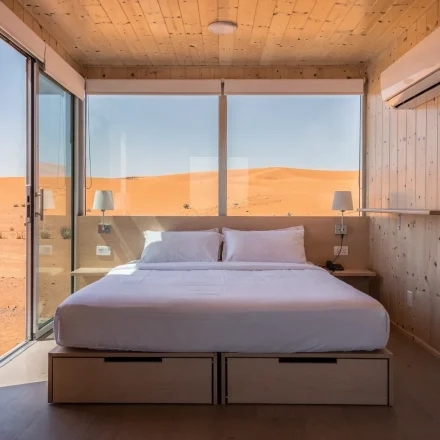
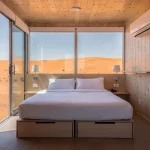
Inside, a dome feels open because the ceiling curves up. Beds sit on a raised platform, and many domes have a window or a clear panel near the bed. Guests who like the night sky will want to check this detail, since not every dome has a clear section.
Bathrooms vary. Some domes have a private bathroom attached as a small annex, while others rely on a nearby block. Therefore read the layout before you book. For a deeper look, see how desert glamping handles comfort in the tent.
Furniture is simple: a bed, a table, a chair and a storage rack. The round wall limits large cabinets, so storage is compact.
Who a Dome Stay Suits and Who Should Skip It
A dome stay suits couples, photographers and travellers who want a solid room with a view. It also suits families with older children, since the dome offers space without the weight of a building. In contrast, guests who need step-free access should check the platform and the door, because most domes sit on raised floors.
Some travellers should think twice. Domes can feel warm in July, so summer stays need strong cooling. Light sleepers may notice wind noise on the skin. Meanwhile, anyone who wants a very large room may prefer a lodge or a villa. Compare the format with the eight desert tent structures before you decide. To see what moves the nightly rate, read dome camp prices explained.
FAQ
What is a desert dome camp?
It is a camp where guests sleep in dome-shaped rooms, usually on a geodesic frame, set on a platform in the desert.
Is a dome the same as a bubble tent?
No. A dome has a frame of struts, while a bubble tent holds its shape with air and has no frame.
Are desert domes hot in summer?
They can be, because the round shell takes the sun on every side. Camps rely on cooling units and shade, so ask about the hours the unit runs.
Can a dome handle wind and sand?
Yes, to a point. The round shape sheds wind and the raised floor blocks sand, but the camp must anchor each dome well.
Do dome rooms have private bathrooms?
Some do, with a small annex. Others share a block nearby, so check the layout before you book.