
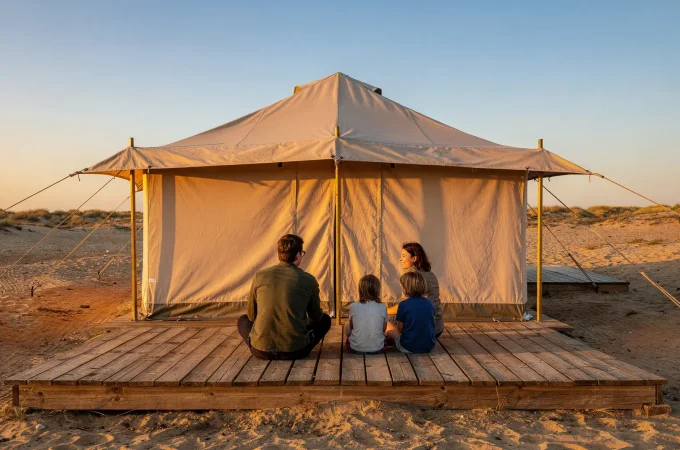
Glamping with kids in the desert works well when the camp fits the age of the children. Check the heat, the bed layout, the bathroom distance and the open fire before you book. This guide covers families, dogs, groups and access needs, so you can ask the camp the right questions first.
Table Of Content
- Is Glamping With Kids in the Desert a Good Idea?
- Heat, Sun and Water: What Children Need in the Desert
- Glamping With Kids: Beds, Bathrooms and Noise in a Family Tent
- Fire, Dunes and Wildlife: Keeping Kids Safe at Camp
- Glamping With Dogs, Groups and Accessible Stays
- FAQ
- Is glamping good for kids?
- What age can children go glamping in the desert?
- Can I take my dog glamping in the desert?
- Is there wheelchair accessible glamping in the desert?
- Is glamping with kids safe?
Is Glamping With Kids in the Desert a Good Idea?
Often yes, because a tent feels like an adventure and the camp handles meals and beds. However, the desert adds limits that a garden campsite does not have. Sun, sand, cold nights and distance from a clinic all matter more with small children. Glamping keeps the camp setting but adds hotel-style comfort, which helps families.
Age changes the answer. Toddlers need shade and a bathroom close to the bed. Older children enjoy dunes, stargazing and campfires, while teenagers want a socket for a phone and some privacy. So match the camp to the youngest child first.
| Age group | What helps | What to ask the camp |
|---|---|---|
| Babies and toddlers | Shade, space for a cot, a short walk to the bathroom | Can you add a cot, and is the bathroom attached? |
| Ages 4 to 8 | Sand play, early activities, beds near the adults | Which activities allow young children? |
| Ages 9 to 12 | Dune walks, a guided evening, a shared tent | Does a guide run a children’s session? |
| Teenagers | Own bed, a socket, a quiet corner | Can you book a second tent next door? |
Heat, Sun and Water: What Children Need in the Desert

Children can overheat quickly, so plan the day around shade. Many camps keep activities for the early morning and late afternoon. In addition, a tent with a cooling unit gives a safe place to rest at midday. Ask when the unit runs, as explained in our guide to air conditioning in glamping tents.
Pack a hat, sun cream, light long sleeves and a refillable bottle for each child. Water comes first: confirm that the camp supplies drinking water all day. Cold nights follow, so bring warm layers even in the hot season.
Glamping With Kids: Beds, Bathrooms and Noise in a Family Tent

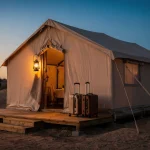
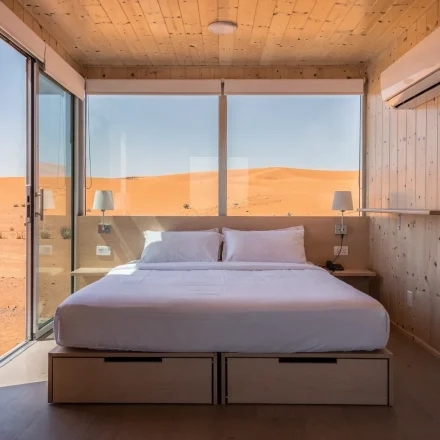
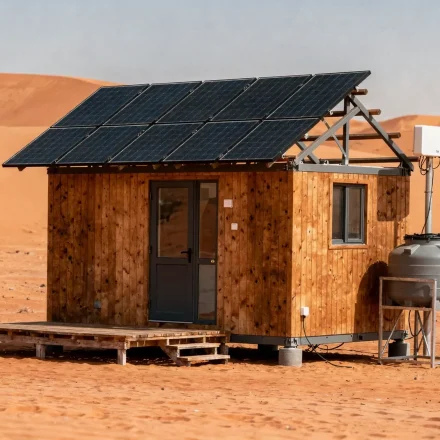
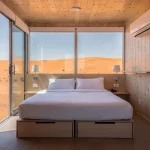
A family tent sleeps several people, but the layout varies. Some tents hold one large bed and two singles, while others use a sofa bed or a separate sleeping area. For layouts that sleep four or more, read about the family desert glamping tent.
Bathrooms matter more at night. A private bathroom attached to the tent saves a dark walk with a sleepy child. Meanwhile, a shared block needs a torch and an adult. The guide to glamping tent bathrooms explains the three layouts.
Canvas carries sound. As a result, a crying toddler can wake the neighbours, and a camp with well-spaced tents suits families better. Ask how far the nearest tent stands.
Fire, Dunes and Wildlife: Keeping Kids Safe at Camp

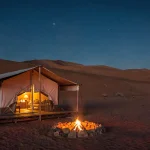
Open fires are part of the evening, so set one clear rule: children stay a fixed distance from the fire pit. Canvas burns, therefore never allow candles or flames inside the tent. Staff at good camps explain these rules at check-in.
Dunes look harmless, yet slopes hide steep edges and the sand hides holes. Children should climb with an adult and wear shoes, since sand can be hot at midday. Many deserts also hold insects, scorpions and snakes. For this reason, check the ground before sitting and shake out shoes in the morning.
Glamping With Dogs, Groups and Accessible Stays
Many camps do not accept dogs. Some allow them in selected tents, while others refuse them to protect wildlife and livestock. Ask before you book, and ask about shade, water and sand temperature for paws.
Groups need more than beds. Large parties should ask about tent clusters, a shared dining area and quiet hours. Accessible glamping needs a ramp or a low-step platform, a wide door and a step-free path to the bathroom. Sand and timber decks can block a wheelchair, so ask for photos of the route.
Ask the camp these questions before you pay:
- What is the minimum age for children?
- Does the tent have a cooling unit, and when does it run?
- Is the bathroom inside the tent or a walk away?
- Are dogs allowed, and in which tents?
- Is the path from the car to the tent step-free?
FAQ
Is glamping good for kids?
Yes, for most families. The camp supplies beds and meals, and children enjoy the tent, the fire and the stars. Heat and sand need planning, though.
What age can children go glamping in the desert?
No single rule applies. Each camp sets its own minimum age for tents and activities, so ask before you book.
Can I take my dog glamping in the desert?
Sometimes. Many camps refuse dogs, and others allow them in certain tents only. Confirm the policy in writing.
Is there wheelchair accessible glamping in the desert?
A few camps offer step-free tents and wide doors. Sand paths can still block a wheelchair, so ask about the route from parking to the bed.
Is glamping with kids safe?
It can be, if you manage heat, fire and dunes. Keep children in shade, away from the fire pit, and with an adult on the sand.