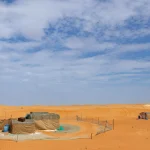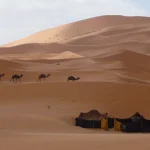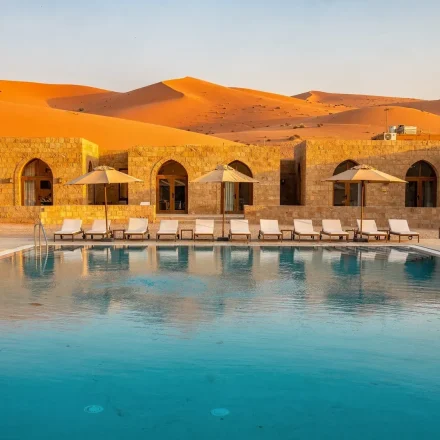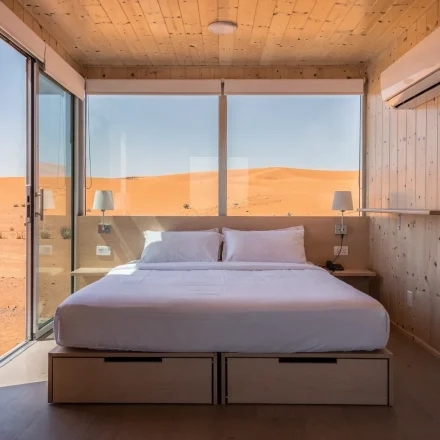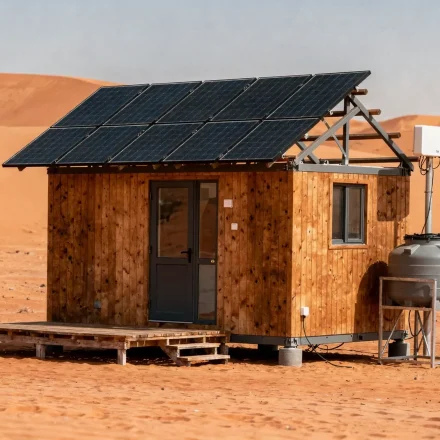

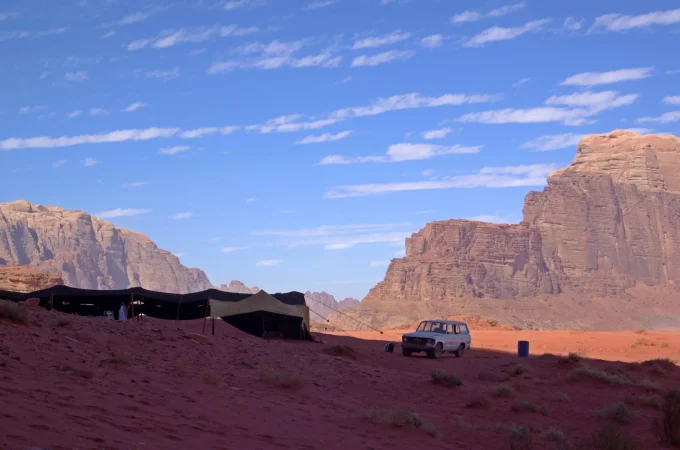
An accommodation property type is the category of the whole place you stay, such as a camp, a lodge, a resort or a villa. So it describes how the property is built and run, not the room you book. In desert travel, the property type tells you early what to expect from walls, bathrooms and service.
Table Of Content
- What Is an Accommodation Property Type?
- Property Type vs Room Type
- Property Type vs Structure: Tent, Dome or Wall
- How Booking Sites Use the Accommodation Property Type
- Why Desert Listings Get the Property Type Wrong
- The Five Desert Property Types at a Glance
- How to Check an Accommodation Property Type Before You Book
- FAQ
- What does property type mean in accommodation?
- Is a property type the same as a room type?
- What property type is a desert camp?
- Can one property have several structures?
- Why does the property type matter?
What Is an Accommodation Property Type?
An accommodation property type is the label that sorts a whole property into one group. Booking sites, tourism boards and owners also use it. For example, a hotel, a guesthouse and a campsite are three different property types.
In the desert, five property types cover most stays: the desert camp, the glamping camp, the lodge, the resort and the villa. Each one answers a few basic questions before you read further. Is it built or tented? How full is the service? Do guests share facilities?
Property Type vs Room Type
The property type describes the whole place, while the room type describes the unit you sleep in. So one property can hold several room types. A desert resort, for instance, may sell standard rooms, suites and pool villas under one name.
This split matters when you compare prices or reviews. For example, a review of the top suite says little about the basic room. Likewise, photos of a villa pool do not mean every room has one. So always match the photos to the exact room type you plan to book.
Property Type vs Structure: Tent, Dome or Wall

The structure is the physical build of a unit, such as a canvas tent, a geodesic dome or a stone room. It sits one level below the property type. As a result, one camp can mix tents, domes and small cabins on the same plot.
Think of it as three layers. To begin with, there is the property type, which is the whole place. After that comes the room type, which is what you book. Then comes the structure, which is what the room is made of. The guide to lodge, resort and tented camp shows how these layers differ in practice.
How Booking Sites Use the Accommodation Property Type
Booking sites use the accommodation property type as a search filter. Owners pick one type when they list, and travelers filter by it. Agoda, for example, publishes a guide to its property types for hosts.
However, the menus are built for cities, not deserts. They offer hotel, apartment, villa and guesthouse, yet rarely a clear “desert camp” choice. Therefore, many camps pick “campground”, “tented camp” or even “hotel”. Meanwhile, a dome unit may sit under a lodge listing.
Why Desert Listings Get the Property Type Wrong
Desert listings often mislabel the property type because owners choose the label that sells best. A camp with private bathrooms may call itself a resort. In the same way, a single tent in a garden may call itself a desert camp.
The words also shift between markets. “Lodge” can mean a stone hotel in Namibia but a tented camp elsewhere. In our sort of 50 desert properties, at least 18 of the 50 owners used tent, tented or glamping in their own wording. So the name is a clue, while the facilities list is the evidence.
The Five Desert Property Types at a Glance
| Property type | Built or tented | Typical bathroom | Service level |
|---|---|---|---|
| Desert camp | Tented | Shared block | Simple, set meals |
| Glamping camp | Tented | Private, attached | Hotel style in tents |
| Desert lodge | Built, small | Private | Personal, few rooms |
| Desert resort | Built, large | Private | Full hotel service |
| Desert villa | Built, standalone | Private | Private, often self-contained |
For a deeper look at the two tented types, read what a desert camp is.
How to Check an Accommodation Property Type Before You Book

Check the property type in four quick steps, because the label alone can mislead. Firstly, read the facilities list, not the name. Secondly, look for the bathroom line: private, attached or shared. Thirdly, find out what the walls are made of.
Finally, compare the photos with the exact room type you plan to book. If anything is unclear, message the property and ask one direct question. In general, a clear answer within a day is a good sign. By contrast, a vague answer usually means the basic room differs from the photos.
FAQ
What does property type mean in accommodation?
It is the category of the whole place you stay, such as a hotel, a camp, a lodge or a villa.
Is a property type the same as a room type?
No. The property type describes the whole place, while the room type describes the unit you book inside it.
What property type is a desert camp?
It is a tented property type, although booking sites often list it as a campground, a tented camp or a hotel.
Can one property have several structures?
Yes. A single desert camp can mix canvas tents, dome units and small cabins on one plot.
Why does the property type matter?
It predicts the basics early: the walls, the bathroom, the service and how close you sleep to the dunes.
Photo credits: Featured image: Wadi Rum BW 20 by Berthold Werner, CC BY-SA 3.0, cropped from the original; Berber camp at Merzouga – Flickr – gailhampshire by gailhampshire, CC BY 2.0, cropped from the original. All via Wikimedia Commons.