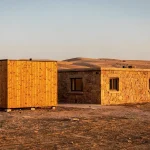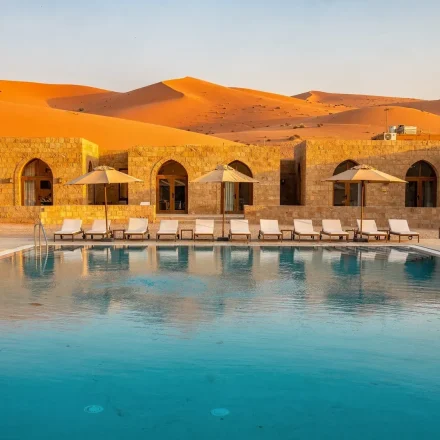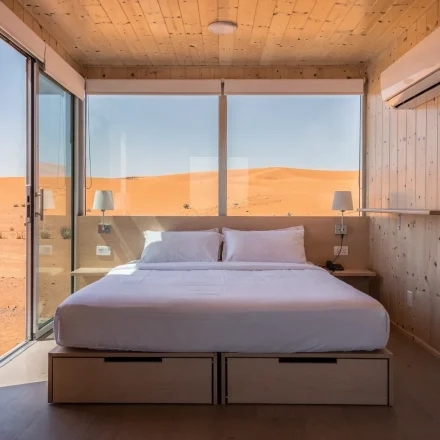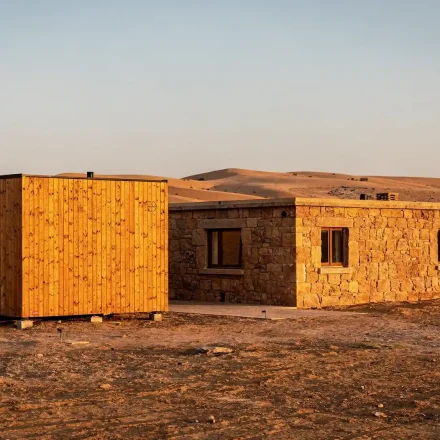

An off-grid modular unit is a factory-built guest cabin that runs without mains power or water. Most use solar panels with batteries and a backup generator, a water tank with a filter, and mobile data or a satellite dish for Wi-Fi. This guide explains how each system works in the desert and what to ask before you book.
Table Of Content
- What Is an Off-Grid Modular Unit?
- Power: Solar, Batteries and a Backup Generator
- How Much Power Does a Desert Unit Use?
- Water: Tanks, Filters and Hot Water
- Wastewater and Toilets
- Wi-Fi: Mobile Data or Satellite
- How Sand, Heat and Dust Affect the Setup
- Off-Grid Modular Unit Setup at a Glance
- What to Ask Before Booking an Off-Grid Modular Unit
- FAQ
- How do off-grid desert cabins get electricity?
- Can an off-grid unit run air conditioning all night?
- Where does the water come from?
- Is there Wi-Fi in off-grid desert units?
- Why do off-grid units limit shower time?
What Is an Off-Grid Modular Unit?
An off-grid modular unit is a room built in a factory, trucked to a remote site and run on its own supplies. The phrase off the grid means it has no connection to public power or water networks. So the camp must produce, store and manage everything on site.
This setup lets camps place units deep in the dunes, far from roads. However, it also means limits on power and water that city hotels never face. For the wider modular family, read our guide to glamping pods in the desert.
Power: Solar, Batteries and a Backup Generator
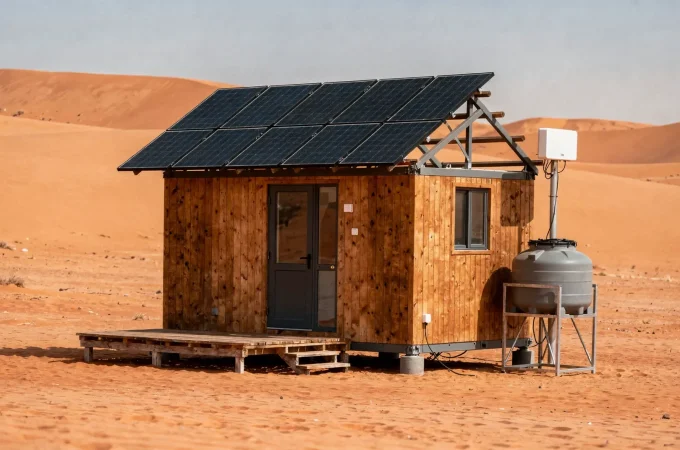
Most off-grid desert units run on a solar power system. Panels on the roof or on a nearby frame charge a battery bank during the day. Then an inverter turns stored power into normal sockets at night.
Many camps now use lithium iron phosphate batteries, which handle heat and deep cycling well. In addition, most keep a diesel generator as backup for cloudy spells or heavy loads. Few tented camps say so on their pages, though. Only 2 of the 22 glamping tent camps in Desert Booker’s database mention solar power at all.
How Much Power Does a Desert Unit Use?
Air conditioning uses far more power than anything else in a desert unit. Lights, fans and phone chargers draw very little by comparison. As a result, the cooling load decides the size of the solar array and battery.
So camps size their systems for the hottest nights, or they limit cooling hours. Good insulation cuts the load sharply. Therefore, a well-insulated unit can run longer on the same battery than a thin one.
Water: Tanks, Filters and Hot Water

Off-grid units usually draw water from a tank that a truck refills. Some sites pump from a borehole instead. Either way, the water passes through a filter and often a reverse osmosis unit before guests use it.
Hot water comes from a small electric heater or a solar water heater on the roof. Since tanks hold a fixed amount, many camps ask guests to keep showers short. Drinking water usually comes in bottles or from a separate filtered tap.
Wastewater and Toilets
Wastewater needs a plan too, because there is no sewer. Many sites collect it in a sealed tank that a truck empties. Others treat greywater from showers and sinks and reuse it for plants or dust control.
In general, flush toilets are common in modular units, yet some remote sites use composting toilets to save water. Check the listing, because the toilet type changes the experience.
Wi-Fi: Mobile Data or Satellite

Wi-Fi at an off-grid unit comes from one of two sources. Near towns, a router connects to the mobile network and shares the signal. Deeper in the desert, camps use satellite internet through a small dish or flat terminal on the roof.
Satellite links now handle video calls in many areas, yet speeds can drop in dust storms or at busy times. Meanwhile, some camps switch the router off at night to save power. Wi-Fi is still rare in tented camps, since only 4 of 22 in our database mention it.
How Sand, Heat and Dust Affect the Setup
Sand and dust coat solar panels and cut their output. So staff must clean the panels often, sometimes daily after a windy spell. Heat also reduces panel and battery performance, which is why camps shade battery cabinets.
Fine sand gets into vents, pumps and filters as well. Good camps therefore service these parts on a schedule. A well-run off-grid unit should feel no different from a normal room, apart from sensible limits.
Off-Grid Modular Unit Setup at a Glance
| System | Common setup | Typical limit |
|---|---|---|
| Power | Solar, batteries, backup generator | Cooling hours at night |
| Water | Trucked tank or borehole, filter | Short showers |
| Hot water | Electric or solar heater | Can run out at busy times |
| Wastewater | Sealed tank or greywater reuse | No sewer connection |
| Wi-Fi | Mobile router or satellite dish | Slower in dust storms |
What to Ask Before Booking an Off-Grid Modular Unit
Before booking an off-grid modular unit, ask five questions. Firstly, does air conditioning run all night? Secondly, is there a backup generator?
Next, ask whether hot water lasts for two showers in a row. Then check how guests get Wi-Fi, and whether it works at night. Finally, ask about drinking water. For the features of tented stays, compare glamping camp features.
FAQ
How do off-grid desert cabins get electricity?
Mostly from solar panels and batteries, with a diesel generator as backup.
Can an off-grid unit run air conditioning all night?
Only with a large enough battery or a generator. So ask the camp before you book.
Where does the water come from?
Usually from a tank that a truck refills, or from a borehole, then through a filter.
Is there Wi-Fi in off-grid desert units?
Often, through mobile data or a satellite dish. However, speed can drop in dust storms.
Why do off-grid units limit shower time?
Because tank water is limited, and trucks must bring every refill.