
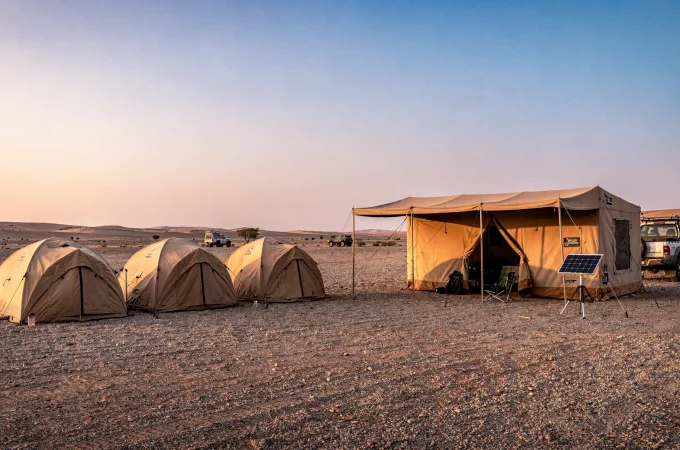
A desert base camp is a working camp that supports a trek, a drive or a research trip. In return, it gives you a tent, food, water and a safe place to rest, and little else. This guide explains what a desert base camp has, what it leaves out and who should book one.
Table Of Content
- What Is a Desert Base Camp?
- What a Desert Base Camp Has
- What a Desert Base Camp Leaves Out
- Desert Base Camp vs Glamping Camp
- Who Should Book a Desert Base Camp?
- How a Desert Base Camp Runs a Day
- FAQ
- What is a desert base camp?
- Does a desert base camp have toilets?
- Is a desert base camp the same as glamping?
- How cold is a desert base camp at night?
- Do I need my own equipment?
What Is a Desert Base Camp?
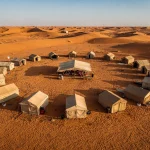
In practice, a desert base camp is a fixed set of tents that a crew sets up as the home point of an expedition. Teams leave each morning and then return at night. Indeed, the idea comes from mountaineering, where the base camp holds supplies and shelter for climbers.
In the desert, the crew first chooses a flat, firm site away from dry riverbeds. Because flash floods can reach low ground, they pitch tents on slightly raised sand or gravel. So the camp stays simple on purpose. Every item has a job, because the crew must carry it in.
What a Desert Base Camp Has

In general, base camps follow the same layout. First, guests sleep in small expedition tents, and the crew cooks and serves meals from a separate kitchen tent. Meanwhile, a larger mess tent gives shade for meals and briefings. For clarity, this table lists the usual items.
| Item | What you usually get |
|---|---|
| Sleeping tent | Low expedition tent with a mat and a sleeping bag or blankets |
| Mess tent | Shade, folding chairs and a table for meals |
| Kitchen | Crew-run gas stove, cool boxes and water containers |
| Toilet | Portable toilet in a screened tent, shared |
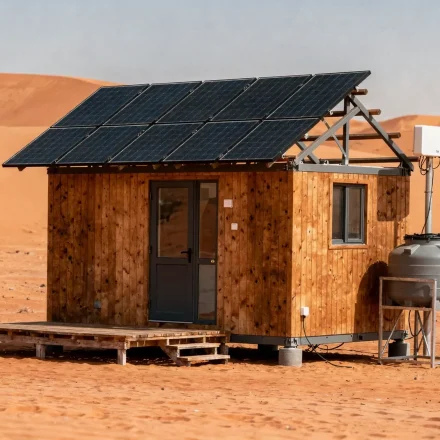
| Power | A small solar panel or generator for lights and radios |
| Safety | First aid kit, satellite phone or radio, a guide on site |
Water comes in sealed containers, so the crew sets a daily amount for drinking and washing. In addition, a guide checks weather and route each evening.
What a Desert Base Camp Leaves Out

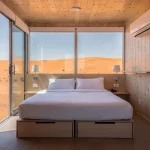
Instead, a base camp leaves out most of the comforts that glamping camps sell. For example, you will not find a private bathroom, a real bed or air conditioning. Mobile signal is often absent, so a radio replaces the phone. Meals are simple and filling rather than varied.
Also, washing is limited to a basin of water or wet wipes. Nights can fall below freezing in winter, while the tent gives only a thin layer of insulation. As a result, guests bring their own sleeping bag rated for the season. Ask the operator what the camp supplies before you pack.
Desert Base Camp vs Glamping Camp

A base camp serves a trip, while a glamping camp serves a stay. The first one moves with the route, and the second one stays on the same site all season. This second table shows the main differences.
| Feature | Desert base camp | Glamping camp |
|---|---|---|
| Purpose | Support an expedition or survey | Give a comfortable stay |
| Bed | Mat and sleeping bag | Real bed with linen |
| Bathroom | Shared portable toilet | Often private |
| Cooling | Shade and airflow only | Often a cooling unit |
| Site | Moves with the route | Fixed all season |
Meanwhile, for the comfort end of the scale, read what desert glamping is. Likewise, the guide to desert stay types compares all the main options.
Who Should Book a Desert Base Camp?
In short, a desert base camp suits trekkers, photographers, researchers and drivers who want to reach remote ground. It also suits guests who value distance from other people over comfort. However, it does not suit anyone who needs a private bathroom or a steady bed. First-time desert guests may prefer a tented camp with more services.
Check the crew size, the guide’s training and the radio plan before you book. In short, a good base camp feels basic but never careless.
How a Desert Base Camp Runs a Day
The day follows the sun. First, the crew wakes before dawn, lights the stove and serves tea and a hot breakfast. Then guests set out on foot, by vehicle or by camel, while the cook stays at camp.
In the middle of the day the group rests in the mess tent, because the heat is strongest then. Afterward, the guide leads a short outing or a lesson on navigation. Finally, at dusk the crew serves dinner and checks the radio. Meanwhile, the guide reviews the next day’s route and the water plan.
FAQ
What is a desert base camp?
It is a fixed camp that supports an expedition. Because of that, guests sleep in small tents and the crew provides food, water and safety gear.
Does a desert base camp have toilets?
Usually yes, but they are portable and shared. Also, ask whether the toilet tent is screened and who empties it.
Is a desert base camp the same as glamping?
No. A base camp supports a trip and keeps comforts low, while glamping sells a comfortable stay with real beds.
How cold is a desert base camp at night?
Winter nights can drop close to freezing in many deserts, so bring a sleeping bag rated for the season.
Do I need my own equipment?
It depends on the operator. Most supply tents and mats, but many ask guests to bring a sleeping bag and a torch.