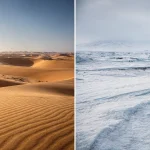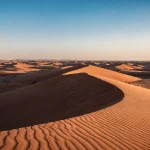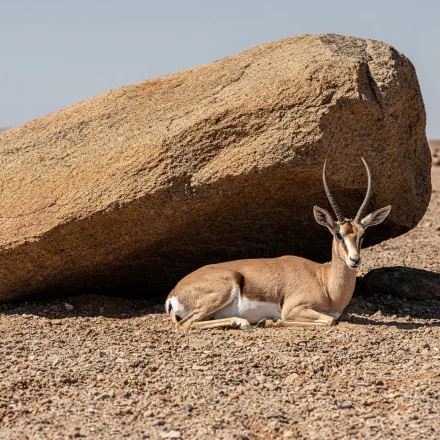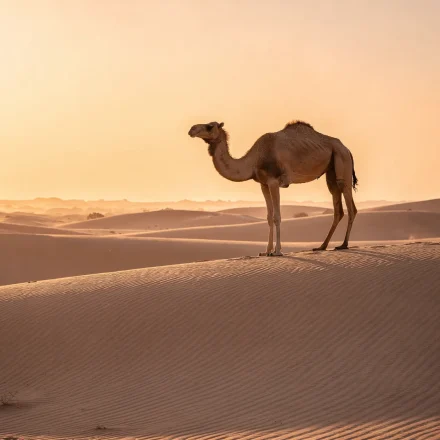


How do deserts form? Five different physical processes can do it. That is exactly why the Sahara, the Gobi, and the Atacama look nothing alike.
Table Of Content
- What Makes a Desert a Desert
- The Five Mechanisms That Form Deserts
- 1. Subtropical High-Pressure Deserts
- 2. Rain Shadow Deserts
- 3. Continental Interior Deserts
- 4. Coastal Fog Deserts
- 5. Polar Deserts
- Why the Mechanism Matters More Than the Label
- A Genuinely Global Pattern
- How Latitude Fits In
- How Much Desert Area Each Mechanism Explains
- What This Means for Your Trip
- Related Categories
- FAQ
- Can a desert form from more than one mechanism at once?
- Do deserts ever stop being deserts?
- Which mechanism produces the most desert by area?
- Can one desert switch which mechanism dominates it?
- Is one mechanism the main cause of desertification?
- Why do some deserts sit at unexpected latitudes, like Patagonia?
What Makes a Desert a Desert
A desert forms because of where it sits. Its position relative to global air circulation, mountain ranges, oceans, or the poles decides how much rain reaches it. The result qualifies as “desert” by the precipitation math in Desert Definition and Classification.
The mechanism behind that dryness varies enormously. It also explains far more than the label does. A desert’s mechanism shapes its landscape, its temperature pattern, and even the adaptations of its wildlife.

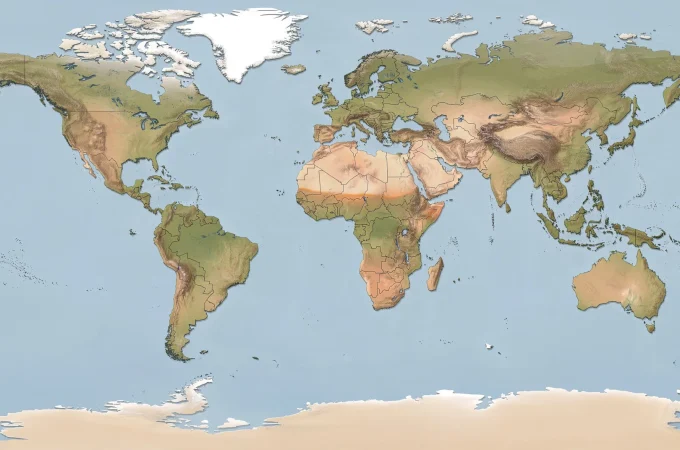
Most of Earth’s deserts sit between 20° and 35° latitude in both hemispheres. Britannica’s survey of world deserts maps the pattern. A smaller group of temperate deserts sits much further from the equator, mainly across Central Asia. That distribution lines up closely with the five mechanisms below.
The Five Mechanisms That Form Deserts
1. Subtropical High-Pressure Deserts
Descending, moisture-starved air sinks at roughly 30° latitude. Meteorologists call this circulation pattern a Hadley cell. It produces the Sahara and the Arabian Desert. Subtropical High-Pressure Deserts covers the mechanism in detail.
2. Rain Shadow Deserts
A mountain range strips moisture out of incoming air and starves the land behind it. The Mojave forms this way. Argentina’s Patagonian Desert shows the effect even more dramatically. See Rain Shadow Deserts.

3. Continental Interior Deserts
Some deserts sit too far inland for ocean moisture to reach them. The Gobi and China’s Taklamakan both fall in this group. Continental Interior Deserts explains the distances involved.
4. Coastal Fog Deserts
A cold offshore current delivers near-daily fog and almost no rain at the same time. The Atacama and the Namib both work this way. Coastal Fog Deserts covers the mechanism.
5. Polar Deserts
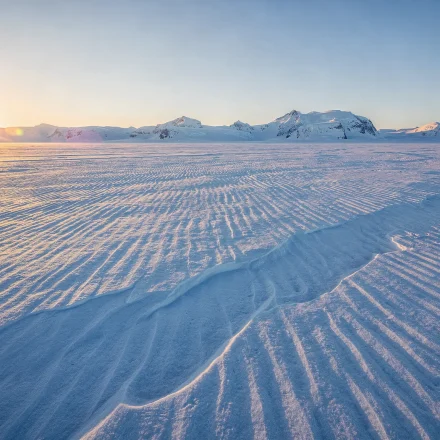
Cold air holds less water vapor than warm air. That lowers absolute humidity and leads to minimal precipitation. Antarctica and the Arctic barely receive any as a result. Polar Deserts explains why.
Why the Mechanism Matters More Than the Label

Two deserts at similar latitudes can look completely different. A rain-shadow desert like the Mojave shares little with a coastal fog desert like the Namib. Both still qualify as arid.
The mechanism explains the landscape, the typical weather, and often the specific adaptations of local wildlife. It also explains why the driest places on Earth usually combine two mechanisms at once. The Atacama sits beside a cold current and in the rain shadow of the Andes.
The practical difference is large. Knowing a destination is “desert” tells you almost nothing about packing. Knowing it is a coastal fog desert changes everything. Expect cool mornings, haze burning off by midday, and dry sunny afternoons. That is a different trip from a subtropical hot desert, where you plan around avoiding the midday sun.
A Genuinely Global Pattern
Four of the five mechanisms repeat on multiple continents independently. Subtropical high-pressure deserts appear across Africa, Arabia, Australia’s Outback, and the Americas. Rain-shadow deserts appear wherever a large enough mountain range blocks prevailing moisture, from the Mojave to Patagonia.
Desert formation is not a regional quirk. It follows predictably from how Earth’s atmosphere and geography interact. Climate scientists can point at a map and predict roughly where deserts belong before checking a single rainfall record.
How Latitude Fits In
The subtropical high-pressure mechanism is unusually predictable. Global air circulation sets its band at roughly 30° north and south, not local geography.
The other four are not latitude-locked. A rain shadow or a continental interior can produce a desert almost anywhere the geography allows. So cold deserts and coastal fog deserts turn up far outside that band, across a much wider range of latitudes.
Polar deserts sit at the extreme of the pattern. Latitude drives them too, but through a completely different process.
How Much Desert Area Each Mechanism Explains
No official tally splits desert area by formation mechanism, because so many deserts are compound cases. A rough picture still helps.
The subtropical high-pressure belt accounts for the largest share of hot-desert area worldwide. The Sahara alone covers close to 9,200,000 km². Polar deserts exceed that total once you count Antarctica and the Arctic together, at roughly 28,000,000 km². Almost no popular desert ranking includes them.
Rain-shadow and continental-interior deserts make up most of the remainder. Coastal fog deserts have the smallest footprint of the five, even though they are the best known of the unusual types.
What This Means for Your Trip
The mechanism changes what you should expect on the ground. A subtropical high-pressure desert delivers relentless clear skies and heat. A rain-shadow desert often sits higher up, with more dramatic terrain. A coastal fog desert trades rainfall for daily fog and cooler air. A polar desert barely resembles the popular image at all.
This is why two countries can both sell themselves as desert destinations and still deliver very different trips. Check each destination’s own page in World Deserts Atlas before you assume what a desert trip will feel like.
Related Categories
Desert Definition and Classification · Desert Geology and Landforms · Desert Climate and Weather · World Deserts Atlas
FAQ
Can a desert form from more than one mechanism at once?
Yes. The Atacama combines a coastal cold current with a rain shadow from the Andes. Those two compounding causes make it one of the driest places on Earth.
Do deserts ever stop being deserts?
The underlying mechanisms stay stable over human timescales. Latitude, mountain position, and distance from the ocean do not shift quickly. An arid zone’s boundary can still move, as Climate Change’s Impact on Deserts explains.
Which mechanism produces the most desert by area?
Polar deserts win by area once you count Antarctica and the Arctic together. The subtropical high-pressure belt produces the most hot-desert area specifically.
Can one desert switch which mechanism dominates it?
Not on human timescales. Mountain position, ocean currents, and distance from the coast stay stable over millennia. A desert’s exact boundary can still creep.
Is one mechanism the main cause of desertification?
No. Desertification describes land degrading toward desert-like conditions, which is a separate process from these five natural mechanisms. What Is Desertification and Why Is It Spreading? covers it.
Why do some deserts sit at unexpected latitudes, like Patagonia?
Rain-shadow and continental-interior mechanisms do not tie to the 30° belt. A big enough mountain range can create a desert far from the tropics, which is exactly what the Andes do.