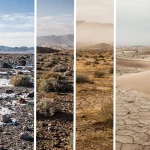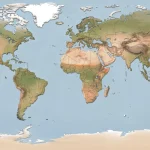


Six desert myths and misconceptions come up again and again. Here they are, starting with the biggest one.
Table Of Content
- Myth 1: The World’s Largest Desert Is the Sahara
- Myth 2: All Deserts Are Hot
- Myth 3: All Deserts Are Sandy
- Myth 4: Deserts Are Lifeless
- Myth 5: Deserts Stay Warm After Dark
- Myth 6: The Sahara Has Always Looked Like This
- Why These Desert Myths and Misconceptions Persist
- Related Topics
- FAQ
- Is Antarctica really classified as a desert by scientists?
- Why do sand dunes get more attention than rock deserts?
- How cold can a hot desert actually get at night?
- Was the Green Sahara a one-time event?
- Are any of these desert myths and misconceptions partly true somewhere?
- Does knowing these myths change how I should plan a desert trip?
Myth 1: The World’s Largest Desert Is the Sahara
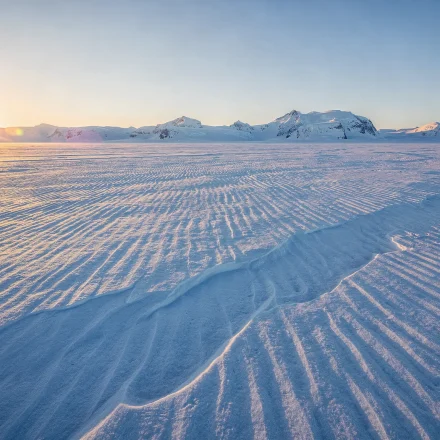
It isn’t. Antarctica covers about 14,200,000 km². The Arctic covers roughly 13,900,000 km². Both dwarf the Sahara at around 9,200,000 km².
Both also qualify as deserts under the standard precipitation-based definition, ice sheets and all. Antarctica’s interior receives well under 50 mm of precipitation a year. By the water-balance math that defines “desert”, that makes it drier than the Sahara.
The ice is a red herring. What looks like abundant water sits locked solid, not cycling through the ground as usable moisture. That distinction is exactly what the Aridity Index captures. Polar Deserts explains how these regions form.

Myth 2: All Deserts Are Hot
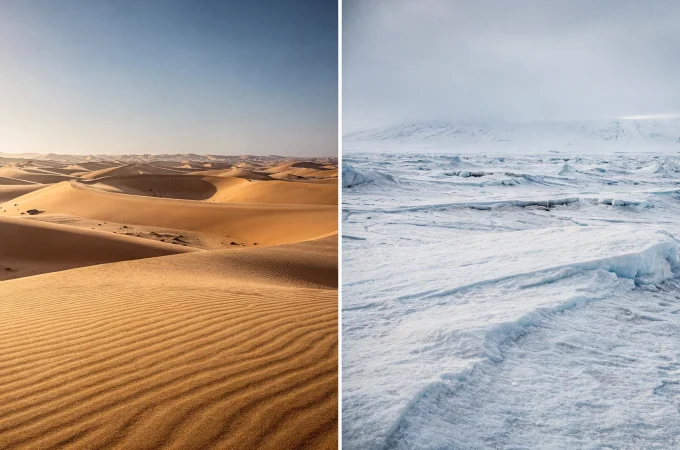
Cold deserts like the Gobi get real winter snowfall. They still classify as desert, because the classification tracks annual moisture, not temperature.
Semi-arid and coastal deserts also run cooler than the Sahara stereotype suggests. The 5 Types of Deserts gives the full breakdown, with temperature figures for each.
Myth 3: All Deserts Are Sandy

Rock and gravel terrain covers more of the world’s desert area than sand dunes do. Geologists call these surfaces hamada and reg.
Even the Sahara is majority rock and gravel, despite being pictured as endless dunes. National Geographic makes the same point in its overview of desert landscapes. For a closer look, see Rock Deserts and Stone Pavements.
Myth 4: Deserts Are Lifeless
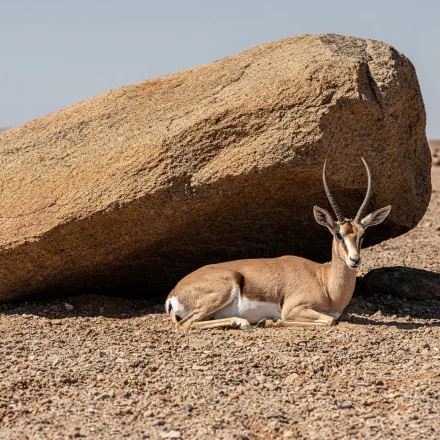
Deserts host some of the most specialised ecosystems on Earth. Xerophyte plants store water for years. Some animals never drink free-standing water at all.
Instead, they pull every drop from their food and their own metabolism. Certain desert rodents live their whole lives on the moisture inside dry seeds. They never need to find open water.
How Desert Plants Survive and How Desert Animals Survive Without Water cover the mechanisms.
Myth 5: Deserts Stay Warm After Dark
Clear, dry air lets a desert overheat by noon. That same air gives no insulation once the sun sets, so heat radiates straight back out.
A hot desert can swing more than 30 °C between its daytime high and its overnight low. Why Deserts Are Scorching by Day and Freezing by Night covers the full mechanism.
Packing only for daytime heat is one of the most common mistakes a first-time desert traveller makes. It is also one of the easiest to avoid.
Myth 6: The Sahara Has Always Looked Like This
It hasn’t. Between roughly 11,000 and 6,000 years ago, much of today’s largest hot desert was savanna and grassland. Lakes and rivers dotted the landscape. Climate scientists call this stretch the African Humid Period, or simply the Green Sahara.

Rock art deep in the modern Sahara shows hippos, giraffes, and cattle herding. That is direct evidence of a wetter, more habitable landscape where dunes and hamada now stretch to the horizon.
A shift in Earth’s orbital cycle is the leading explanation for the drying that followed. No human cause is needed to account for it.
Why These Desert Myths and Misconceptions Persist
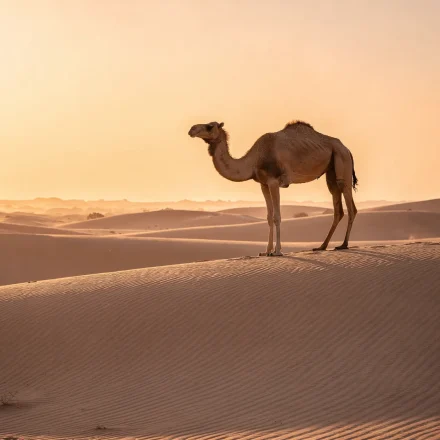
Popular desert imagery leans hard on hot, sandy dune fields. Film, stock photography, and tourism marketing all reach for the same scenes. They are the most dramatic, not the most representative.
Repeat that selection bias widely enough and it becomes the default mental picture. That is why an accurate classification system still surprises people. What Is a Desert? sets out how the real definition works.
The fuller picture also changes what is worth photographing on a trip. A rock-and-gravel hamada or a fog-shrouded coastal dune field can be just as striking as a classic sand sea. You simply have to stop expecting one single look.
Related Topics
What Is a Desert? · The 5 Types of Deserts · Polar Deserts · Rock Deserts and Stone Pavements
FAQ
Is Antarctica really classified as a desert by scientists?
Yes, formally. It meets the precipitation-based aridity definition, and climatologists widely cite it as the world’s largest desert.
Why do sand dunes get more attention than rock deserts?
The reason is visual and cultural. Dune fields photograph more dramatically, even though rock and gravel cover more desert area.
How cold can a hot desert actually get at night?
Below freezing, in well-documented cases, even in deserts known for extreme daytime heat. It happens most often outside peak summer. The swing comes from low humidity and clear skies, not the season alone.
Was the Green Sahara a one-time event?
No. Evidence suggests the Sahara has cycled between wetter and drier states many times over hundreds of thousands of years. Long-term shifts in Earth’s orbit and axial tilt drive the cycle.
Are any of these desert myths and misconceptions partly true somewhere?
Some hot deserts genuinely are sand-dominated in places, such as the core of the Rub’ al Khali. The myths are not wrong everywhere. They are wrong as a default assumption applied to every desert.
Does knowing these myths change how I should plan a desert trip?
Yes. Check a destination’s actual desert type and terrain first, rather than defaulting to the dune-sea image most marketing uses.