


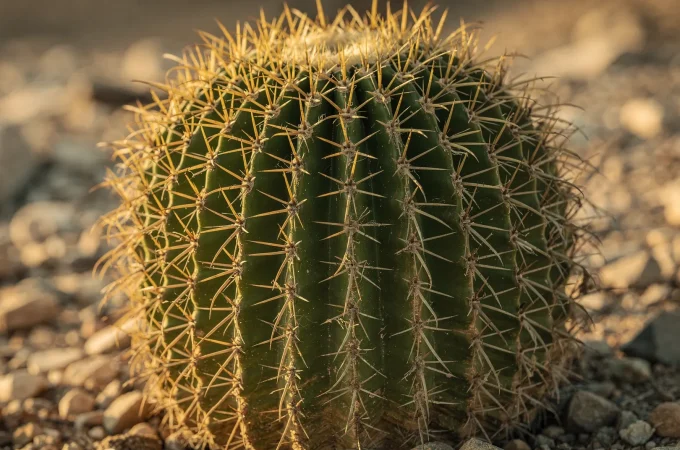
Desert plants don’t just tolerate water scarcity. Many are built around it as their central survival strategy, down to how and when they photosynthesize.
Table Of Content
- What This Category Covers
- The 5 Topics Within This Category
- The Core Survival Problem Every Desert Plant Solves
- Why Desert Plants Evolved So Many Different Solutions
- Named Groups Worth Knowing
- A Genuine Ranking Note
- How These Adaptations Relate to Each Other
- Why This Matters for a Trip
- Related Categories
- FAQ
- Do all desert plants use the same survival strategy?
- Why don’t desert plants just grow smaller leaves everywhere to save water?
- Is a succulent the same thing as a cactus?
- Do desert plants need any rainfall at all to survive?
- Are desert plant adaptations the result of one evolutionary event or many?
- Why does this category avoid naming specific countries’ native plants?
What This Category Covers

This category explains the general biological mechanisms desert plants, known as xerophytes, use to survive on minimal water. That means water storage, leaf and stomatal adaptations, root strategies, and the specific plant groups that demonstrate each mechanism.
It deliberately stays at the level of general desert botany. It does not list which specific plants grow in any one Desert Booker destination country. For that, check the relevant Country Hub’s own Flora page.
The mechanisms covered here appear, in varying combinations, across unrelated plant families on different continents. That pattern is a strong sign of genuine evolutionary solutions to aridity, not a coincidence tied to one region.
The 5 Topics Within This Category

This pillar links to five focused topic pages, each covering one mechanism or plant group in depth.
How Desert Plants Survive: Xerophyte Adaptations covers the core mechanisms: succulence, CAM photosynthesis, root strategy, and leaf reduction. Cacti and Succulents focuses on water-storage anatomy, including the areole structure unique to true cacti.
Desert Trees and Shrubs covers deep-root and salt-tolerance strategies in larger plant forms, using acacia, tamarisk, and date palm as worked examples. Desert Grasses and Groundcover covers the ecosystem-anchor species that stabilize desert soil against wind erosion, and Rare and Endemic Desert Plants covers species under genuine pressure from habitat disruption and groundwater extraction.
The Core Survival Problem Every Desert Plant Solves

Every strategy in this category ultimately answers the same question. Photosynthesis normally requires open stomata, and open stomata mean water loss through transpiration. So how does a plant keep photosynthesizing in an environment where water may not return for months?
Britannica’s entry on Crassulacean acid metabolism frames CAM precisely as a carbon-fixation pathway that evolved specifically as an adaptation to arid conditions. It lets a plant build up carbon dioxide reserves at night, when stomata can open with far less water loss, then complete photosynthesis during daylight hours with the stomata mostly shut. It is one of several distinct evolutionary answers to the same underlying problem.
Why Desert Plants Evolved So Many Different Solutions

No single mechanism solves the water-scarcity problem completely on its own. That is why desert plants tend to combine two or three strategies rather than relying on one.
A cactus pairs succulence with CAM photosynthesis and a shallow, wide root system built to catch brief surface rain. A desert tree instead pairs a deep taproot with reduced leaf size, reaching groundwater other plants cannot touch. A grass skips water storage entirely, relying on fibrous roots and leaf-rolling instead.
This diversity of overlapping solutions is part of why desert flora, examined closely, turns out to be far more varied than the “just cactus and sand” image most people start with.
Named Groups Worth Knowing
A handful of plant groups recur often enough across this category to be worth knowing by name before diving into the specifics.
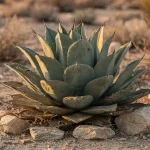
Succulents broadly, including but not limited to true cacti, dominate the popular image of desert flora. Deep-rooted trees and shrubs like acacia and tamarisk do the less photogenic work of anchoring larger desert ecosystems.
Oasis-dependent species like the date palm rely on groundwater access rather than drought tolerance alone. Soil-stabilizing grasses like esparto hold dune bases together against wind erosion. The broader category of endemic species, restricted to a single isolated desert region, rounds out the group.
Knowing these five groups in advance makes the more detailed topic pages considerably easier to follow.
A Genuine Ranking Note
Not every desert plant relies on visible water storage the way a cactus does. Root strategy and leaf adaptation are, across desert ecosystems worldwide, at least as common a survival approach as succulence.
Succulents still dominate the popular image of desert flora, for an obvious reason: they photograph well and look strange to non-desert eyes. Grasses and deep-rooted trees rarely appear on a postcard.
Yet those less photogenic plants arguably do more collective ecological work. They stabilize soil and anchor entire ecosystems in a way no single cactus does on its own.
How These Adaptations Relate to Each Other
The five topics in this category are not independent lists of unrelated plants. They represent different combinations of the same limited set of underlying strategies, covered in full on the Xerophyte Adaptations page.
Once that foundational mechanism is clear, the other four topics become a matter of recognizing which specific combination of strategies a given plant group relies on. That is a much easier task than memorizing unconnected facts about each one.
Why This Matters for a Trip
Recognizing a handful of desert plant adaptations while traveling turns a plain-looking landscape into something considerably more legible. A ribbed cactus stem, a deep-rooted acacia, a grass anchoring a dune’s base: each one adds genuine context to what would otherwise just be “some plants” in a photo.
It is also a practical safety note in some regions. Certain desert plants, including spined cacti and some thorned Acacia species, are worth recognizing simply to avoid brushing against them.
Related Categories
Desert Fauna: Animal Life and Adaptations · Desert Climate and Weather · Desert Geology and Landforms · World Deserts Atlas
FAQ
Do all desert plants use the same survival strategy?
No. Succulence, or water storage, deep roots, and CAM photosynthesis are three genuinely distinct strategies. Different desert plant families rely on different combinations of them.
Why don’t desert plants just grow smaller leaves everywhere to save water?
Many do reduce leaf surface area for exactly this reason, but it is a trade-off. Smaller leaves also mean less photosynthetic surface, so plants combine leaf reduction with other strategies like succulence or deep roots rather than relying on it alone.
Is a succulent the same thing as a cactus?
No. All cacti are succulents, but succulent is a much broader functional term covering many unrelated plant families that store water in thickened tissue. The full distinction is covered in Cacti and Succulents.
Do desert plants need any rainfall at all to survive?
Yes, eventually. Even the most water-efficient xerophytes rely on occasional rainfall or accessible groundwater over the longer term. Their adaptations extend how long they can go between water events, not eliminate the need for water entirely.
Are desert plant adaptations the result of one evolutionary event or many?
Many, independently. Unrelated plant families on different continents have separately evolved similar strategies, like succulence or CAM photosynthesis, in response to similar arid conditions. Biologists call this pattern convergent evolution.
Why does this category avoid naming specific countries’ native plants?
To keep the focus on the general biological mechanisms that apply everywhere arid conditions exist. A specific destination’s actual plant list is covered instead on that Country Hub’s own dedicated Flora page.