
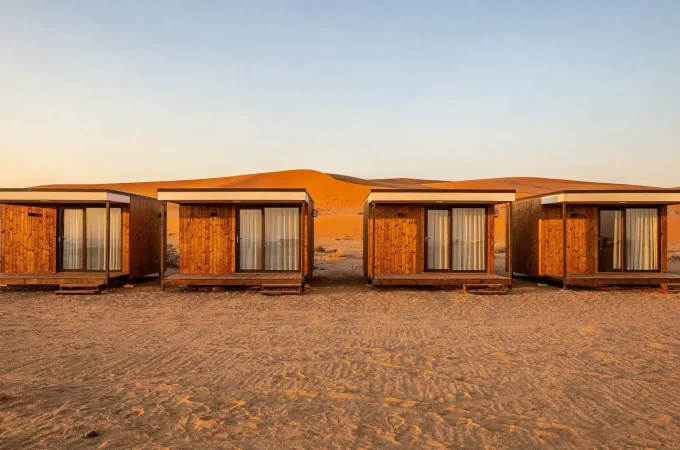
Desert modular cabin prices depend on build quality, size, facilities, delivery to a remote site, power and water, and location and season. In general, a modular cabin sits between a tent and a lodge on price. This guide explains what drives the nightly rate, without quoting figures that change by date.
Table Of Content
- What Drives Desert Modular Cabin Prices?
- Build Quality: Insulation, Glass and Finish
- Size and Layout
- Bathroom, Kitchen and Cooling
- Delivery, Footings and Site Work
- Power and Water on Site
- Location, View and Season
- Desert Modular Cabin Prices at a Glance
- Desert Modular Cabin Prices vs Tents and Lodges
- FAQ
- Are modular cabins cheaper than desert hotels?
- Why do off-grid modular cabins cost more per night?
- Do modular cabins have private bathrooms?
- Are modular cabins comfortable in summer?
- When are modular cabin rates lowest?
What Drives Desert Modular Cabin Prices?
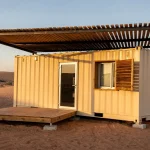
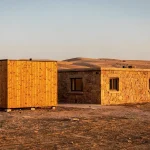
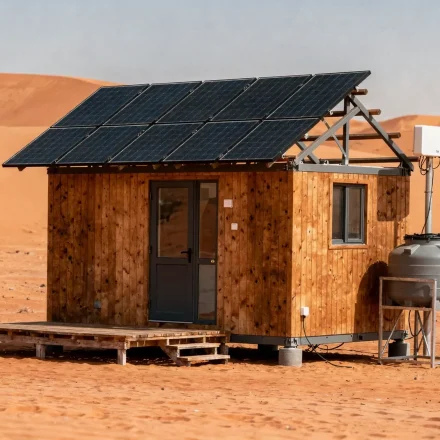
Desert modular cabin prices follow the cost of building, delivering and running each unit. A modular cabin is a factory-built room that a truck carries to the site and sets on footings. Because a factory builds it, the finish can match a hotel room.
However, the desert adds costs a city hotel never pays. Every unit needs strong insulation, cooling and a supply of power and water. So the rate reflects both the box and the site around it. For the wider modular family, see our guide to glamping pods in the desert.
Build Quality: Insulation, Glass and Finish
Build quality is the first price driver. A cabin with thick insulation, sealed joints and double glazing costs more to make. In return, it stays cooler by day and warmer at night.
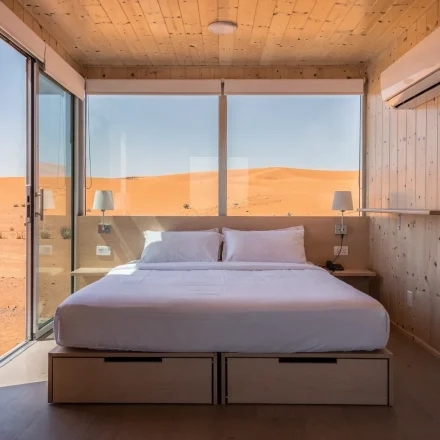
The finish matters too. Timber linings, good beds and solid doors raise the cost of each unit. As a result, two cabins of the same size can sell at very different rates.
Size and Layout
Larger cabins cost more, because each module needs more material and more cooling. For instance, some camps join two modules to make a suite with a lounge. Others add a covered deck, which extends the living space outside.
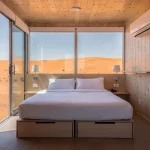
Layout also changes the rate. For example, a cabin with a full glass wall facing the dunes usually sells higher than one with small windows. Families may pay more for a second bedroom module.
Bathroom, Kitchen and Cooling
A private bathroom inside the module is now the norm in modular stays. Some cabins also add a small kitchen, which suits longer stays. Each of these adds plumbing, water and power use.
Meanwhile, cooling is the largest running cost in hot months. Therefore, units with good insulation and efficient air conditioning keep the rate steadier. Poorly insulated units, by contrast, burn more fuel or power each night.
Delivery, Footings and Site Work

Getting a module to a remote site is a real cost. A truck must reach the spot, and a crane or lifting gear must set the unit down. Then workers level the ground and place footings under each corner.
Deep-dune sites cost more than sites near a road, because heavy vehicles struggle in soft sand. Since the camp spreads these one-time costs over years, they show up in the rate as a smaller daily share. Similarly, moving units to a new site later adds cost again.
Power and Water on Site
Remote modular camps often make their own power with solar panels, batteries and a backup generator. A solar power system cuts fuel use, yet it needs a large upfront spend. Water usually arrives by tanker and passes through a filter.
So a cabin far from the grid carries a higher running cost per night. On the other hand, a site with grid power and mains water can keep rates lower.
Location, View and Season

Location and season move the rate in the same way as at any desert stay. Cabins with an open view of tall dunes sell more nights in the cool months. Meanwhile, weekends and public holidays fill first.
Many sites also charge value-added tax and local tourism fees. Therefore, compare totals rather than headline rates. For a broader look at seasonal swings, read what changes desert glamping prices.
Desert Modular Cabin Prices at a Glance
| Driver | Pushes the rate up | Pulls the rate down |
|---|---|---|
| Build | Thick insulation, double glazing, timber finish | Basic panels, small windows |
| Size | Two modules, large deck | Single compact module |
| Facilities | Private bathroom, kitchen, strong AC | Shared facilities, fans only |
| Site | Deep dunes, off-grid | Near a road, on the grid |
| View | Open dune view, glass wall | Inner row, no view |
| Season | Cool months, holidays | Shoulder months, midweek |
Desert Modular Cabin Prices vs Tents and Lodges
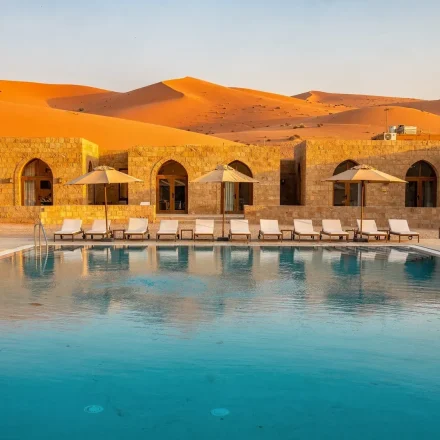
A modular cabin usually costs more than a simple tent and less than a full lodge or resort. It offers solid walls and a private bathroom, yet it skips the large shared spaces of a hotel. So it suits guests who want comfort without resort prices.
The type is still uncommon. In fact, none of the 50 desert properties in Desert Booker’s database is a modular cabin site, while 26 are tented camps. For comparison, read desert camp vs hotel and what a desert lodge is.
FAQ
Are modular cabins cheaper than desert hotels?
Usually, yes, because they skip large shared facilities. However, top-end cabins can match hotel rates.
Why do off-grid modular cabins cost more per night?
Because solar systems, batteries, generators and trucked water all add to the running cost.
Do modular cabins have private bathrooms?
Most do, since the bathroom is built into the module at the factory.
Are modular cabins comfortable in summer?
Yes, when they have good insulation and air conditioning. So ask how long the cooling runs at night.
When are modular cabin rates lowest?
Usually midweek in the shoulder months, at the edges of the cool season.