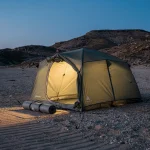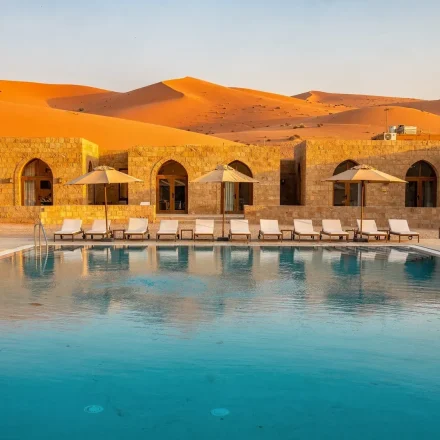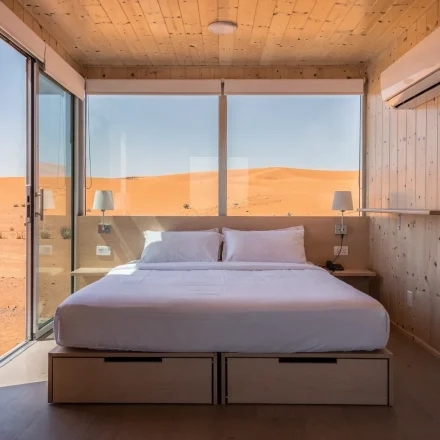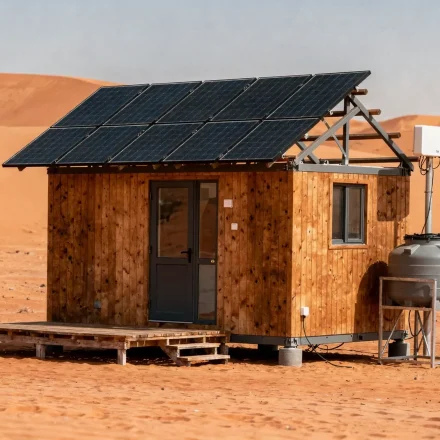
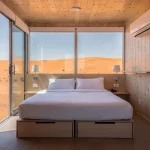

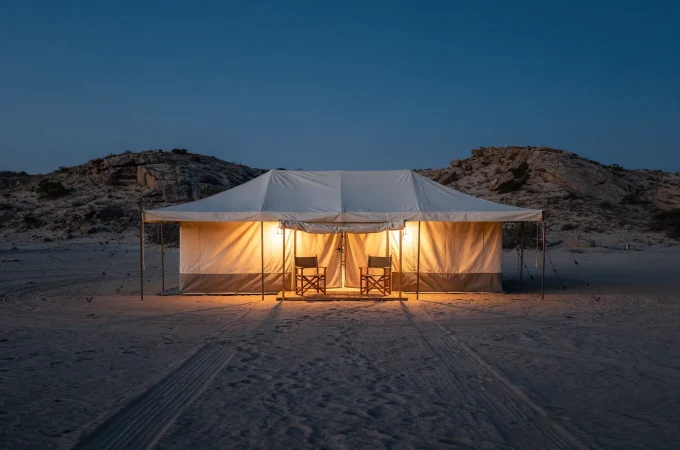
Standing height, a real bed, and no luxury claim attached. The Classic Safari Tent sits in the middle of the Tented Camp System. It is also the tier most desert travelers actually sleep in.
Table Of Content
- What A Classic Safari Tent Is
- Standing Height and Layout
- What Is Included
- Bathroom Arrangements
- Bedding and Overnight Comfort
- How It Compares Up and Down the Class
- Where It Operates
- Noise
- Insects
- What to Check Before Booking
- FAQ
- Does a classic safari tent have a private bathroom?
- Is there air conditioning?
- How hot does the tent get during the day?
- Can two adults and two children share one tent?
- Is it suitable for a first desert night?
It delivers a room rather than a shelter. What it leaves out is the en-suite bathroom, the climate control and the designed interior that move a tent into the luxury tiers. Knowing exactly where that line sits prevents most of the disappointment in this class. Operators apply the words “safari tent” across a far wider range than the term suggests.
What A Classic Safari Tent Is
A walk-in canvas or polycotton tent on a frame, usually pitched on a raised platform. Inside you get a made bed, basic furniture and a lit interior.
Britannica describes the wall tent as an A-shaped tent raised to allow straight vertical walls beneath the slope. That is precisely the geometry most safari tents use. Those vertical walls create usable floor area at the edges, instead of a sloping roof that pushes everything to the center.
The tier assumes a serviced camp. Someone else pitches the tent, makes the bed, brings water and cooks. That separates it clearly from the Expedition Tent, where the structure supports a route rather than a stay.
Standing Height and Layout

Expect a ridge height of roughly two to two and a half meters. Floor area fits a double or twin bed, a side table, a luggage rack and a chair.
Most units add a veranda or shaded deck at the entrance. That becomes the real living space during the day. Tent interiors heat quickly once the sun is high, and shaded outside air beats enclosed inside air.
Ventilation design separates a well-built unit from a poor one. Tents with high ridge vents and low openings at the wall base drive convection and stay usable through the afternoon. Tents with one zipped door and no cross-flow become unusable between roughly eleven and four. No amount of furniture quality compensates for that.
What Is Included
A made bed with real linen, lighting, a fan or ventilation, luggage storage, and access to camp meals and water. Most camps also provide a torch, since paths between tents stay unlit by design in dark-sky locations.
Power is usually limited to charging points in a central area rather than a socket in the tent. Camps running solar with battery storage often cut inverter supply overnight to protect capacity.
Absent at this tier: private bathroom plumbing, air conditioning, a minibar, room service and reliable data coverage. Some camps add an en-suite while keeping everything else at this level. Those usually sit at the boundary with the Luxury Safari / Glamping Tent, and the rate reflects it.
Bathroom Arrangements

Three arrangements dominate at this tier. First, a shared washblock serving the camp. Second, a screened private toilet and bucket shower set immediately behind the tent. Third, a plumbed shared facility at camps with a water connection.
The middle option is the most photographed and the least explained. It gives privacy without plumbing. Hot water arrives when staff fill the tank, not when you turn a tap.
Water constraint is real and rarely stated on a booking page. Camps far from a supply line truck their water in. Shower duration therefore depends on tank capacity, not preference. Asking how water reaches the camp tells you more than any bathroom photograph.
Bedding and Overnight Comfort
Bedding is the quiet variable at this tier, and the one guests notice at three in the morning. Camps running proper mattresses on a raised frame deliver a night close to a mid-range hotel. Camps running thin foam on a pallet do not. The tent photograph looks identical either way.
Where a listing specifies mattress type or bed frame construction, the operator usually invested in it. Where the listing shows only styled interior shots taken at dusk, assume the bed is where the budget was saved.
Blankets matter more than most travelers expect. This tier has no climate control, so the camp manages the overnight drop with layers rather than a thermostat. A well-run camp puts more weight on the bed in December than in October without being asked.
Guests who sleep cold should say so at check-in rather than at midnight. Spare bedding is almost always available, and almost never offered automatically.
How It Compares Up and Down the Class
Downward, against the expedition tier, the gain is standing height, a bed and service.
Upward, the gaps are specific: no private plumbed bathroom, no climate control, and interiors furnished for function rather than design. The Ultra-Luxury Suite Tent sits two steps above. It reaches hotel-suite service, a private deck and, at some properties, a plunge pool.
Sideways comparisons matter as much. An Eco Pod / Capsule at a similar rate trades cultural texture and airflow for insulation, quiet and a working bathroom. A Geodesic Dome Unit trades the same for interior volume and glazing.
So travelers who care most about sleeping well should look sideways rather than upward. The tier above solves comfort with money. A different class solves it with construction.
Where It Operates

This tier carries the largest share of bookable serviced inventory across the UAE, Morocco, Namibia and Oman.
Morocco’s erg camps hold the densest concentration, often a short transfer from a road head. The UAE and Oman run the tier close to cities, which keeps transfers short and makes single nights practical. Namibia uses it on longer circuits, where the camp is often the only accommodation for a considerable distance.
Season runs October to April in the northern destinations, and May to October in Namibia. Because this tier has no climate control, that boundary is a harder limit than it is one tier up.
Noise
Noise behaves differently in canvas than in a building, and it is the most common complaint here. Fabric walls pass sound almost unchanged. A neighboring tent at conversational volume is audible. So is a generator two hundred meters away, from inside a closed tent.
Camps that handle this well do three things. They space the tents further apart than the site strictly requires. They put the generator behind a rise or a masonry screen. And they switch to battery supply overnight. Camps that handle it poorly line the tents in one row at even spacing, which is efficient to service and acoustically open from end to end.
Insects
Insects are the other question guests rarely ask. Desert camps face far less mosquito pressure than wetter regions. The real issues are beetles, moths drawn to interior light, and occasionally scorpions near stored firewood or under bags left on the ground.
An intact sewn-in floor, a working inner mesh door and the habit of keeping luggage on a raised rack remove nearly all of it. This is another reason to check platform construction before booking rather than after arrival.
What to Check Before Booking
Four items settle most of the experience. Whether the tent stands on a raised platform or directly on sand, which decides level floor, drainage and how much blows in. Whether ventilation is designed or improvised. Which of the three bathroom arrangements applies. And how many tents the camp runs, because a twelve-tent camp and a sixty-tent camp deliver different nights on identical specifications.
One further check is worth the message: how far the camp sits from the nearest road and settlement. Camps marketed as remote are sometimes twenty minutes from a highway. The difference shows up at night as traffic noise and light on the horizon, which is the exact thing most guests at this tier came to avoid.
Finally, confirm what happens if the weather turns. Sandstorms close camps for a day or two most seasons, and operators differ sharply in response. Some move guests to a fixed property and absorb the cost. Some offer a credit. Some treat it as force majeure and refund nothing. Asking costs nothing, and the answer tells you how the operator behaves when something goes wrong.
FAQ
Does a classic safari tent have a private bathroom?
Usually not a plumbed one. Expect a shared washblock, or a screened private toilet and bucket shower behind the tent. A fully plumbed en-suite generally places the unit in the luxury tier above.
Is there air conditioning?
Rarely at this tier. Comfort comes from canvas breathability, cross ventilation and the shaded veranda. Camps that add climate control normally price the unit as a luxury tent.
How hot does the tent get during the day?
Hot enough that most guests use the shaded veranda instead of the interior between late morning and mid afternoon. Well-vented tents with high ridge openings stay noticeably cooler than sealed ones.
Can two adults and two children share one tent?
Sometimes, though the layout is sized for two. Camps that handle families properly use the Family / Multi-Unit Tent instead. It connects sleeping compartments under one envelope rather than adding beds to a single room.
Is it suitable for a first desert night?
Yes, and most first-time desert travelers book this tier. It gives you a real bed and camp service while keeping the fabric wall, and the outside temperature, closer than any hard-wall unit does.