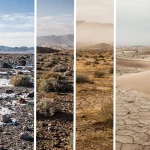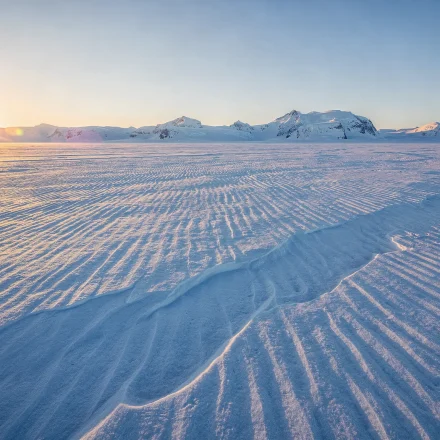


Four bands of dryness sit on one continuum. Desert, semi-arid, dry sub-humid, and steppe are not swappable words. Each marks a different point on the same precipitation-versus-evaporation scale. Getting desert vs semi arid right is what sets your expectations for everything from vegetation to what you should pack.
Table Of Content
- Hyper-Arid: The Driest Band
- Arid: True Desert
- Semi-Arid
- Dry Sub-Humid: The Almost-Steppe Band
- Where Steppe Fits
- Steppe vs Prairie vs Savanna
- Two Steppe Subtypes Worth Knowing
- Desert vs Semi Arid: Why the Difference Matters for a Trip
- Related Topics
- FAQ
- Is a steppe technically a desert?
- Can a semi-arid region turn into a true desert?
- What does “dry sub-humid” actually mean in practice?
- Is a prairie the same thing as a steppe?
- Why does the UN track four bands instead of a simple desert or not-desert split?
- What is the practical difference between grass steppe and desert steppe?

Hyper-Arid: The Driest Band
This is the most extreme tier on the UN’s Aridity Index scale, at a value under 0.05. Some definitions express it differently: land that goes twelve consecutive months or more without measurable rain.
The Atacama’s driest sections and parts of the Sahara sit here. Certain Atacama weather stations have gone decades at a time without recording measurable rainfall.
Arid: True Desert
An Aridity Index of 0.20 down to 0.05. In plain terms, annual precipitation below roughly 250 mm, with potential evaporation exceeding it.
This is the standard desert classification, covered in full on What Is a Desert?. It is also the band that casual use of the word “desert” usually means.
Semi-Arid
An Aridity Index of 0.20 to 0.50, or roughly 250 to 500 mm of rain a year. That is enough to support noticeably more vegetation than true desert, usually grassland or scrubland.
It is still too little for reliable rain-fed farming without irrigation. Much of the world’s rangeland, used for extensive livestock grazing, falls in this band.
Dry Sub-Humid: The Almost-Steppe Band
The UN’s fourth and least familiar tier runs from 0.50 to 0.65. Land here is not arid by most working definitions.
Even so, it is dry enough that international bodies monitoring desertification track it as at-risk terrain. That is a useful reminder in itself. The line between “drying out” and “fine” is a moving, monitored one rather than a fixed border. Parts of the Mediterranean basin and the fringes of the North American Great Plains sit in this band, and the UN Convention to Combat Desertification sets out all four bands in its aridity reporting.
Where Steppe Fits

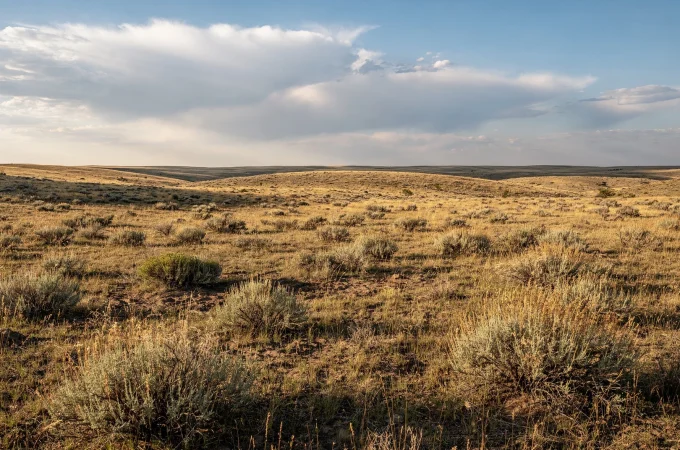
Steppe is a temperate grassland biome, most associated with the plains of Central Asia. The Kazakh and Mongolian steppe are the textbook cases. Historically, the term also covered parts of North America’s interior.
Britannica describes steppe as too dry to support forest, yet not dry enough to count as desert. Climatically, it overlaps heavily with the semi-arid band rather than naming its own rainfall range.
So the practical difference is vegetation, not millimetres. Steppe means short, grass-dominated cover with few trees or none at all.
Steppe vs Prairie vs Savanna
These three get mixed up often enough to be worth separating.
Steppe is the cold-winter, semi-arid grassland of temperate latitudes. Central Asia is the standard example.
Prairie describes a similar grass-dominated biome at slightly higher rainfall. The term belongs historically to the tallgrass and mixed-grass plains of central North America.
Savanna is warmer, often tropical or subtropical, and carries scattered trees. That is a different vegetation structure from either of the other two. Savanna more often borders true desert in Africa and Australia, a transition covered further in The 5 Types of Deserts.
All three sit wetter than true desert on the same scale. None of them are synonyms.
Two Steppe Subtypes Worth Knowing
Geographers usually split steppe in two. Grass steppe carries denser, taller cover and sits closer to the wetter edge of the semi-arid band.
Desert steppe is sparser and shorter, sitting right at the semi-arid and arid border. During multi-year droughts, it sometimes gets reclassified toward desert, the same drift covered on What Is Desertification?
This distinction matters for trip planning in Central Asia specifically. The two subtypes can look meaningfully different inside a single regional route.
Desert vs Semi Arid: Why the Difference Matters for a Trip

A true desert and a semi-arid steppe can sit inside the same country and look nothing alike. One reads as scattered scrubland. The other reads as bare sand or rock.
Knowing which one your destination actually is sets realistic expectations for vegetation, wildlife density and photography. A steppe destination looks green and holds grazing animals in a way a hyper-arid one never will, whatever the season.
It also changes what gear makes sense. Steppe travel usually means more variable weather and taller cover underfoot than a dune-sea trip. Layered clothing matters more there than in a true desert’s steadier heat, a planning point covered further in Desert Climate and Weather.
Related Topics
What Is a Desert? (Precipitation and the Aridity Index Explained) · The 5 Types of Deserts
FAQ
Is a steppe technically a desert?
No. Steppe sits in the semi-arid band, wetter than true desert. It often lies next to desert, and Central Asia’s steppe-to-desert transitions are well documented, but it does not meet the arid threshold itself.
Can a semi-arid region turn into a true desert?
Yes, through desertification. That process is covered in depth on What Is Desertification? It is distinct from a region’s natural, stable climate classification.
What does “dry sub-humid” actually mean in practice?
It describes land that is not arid, yet dry enough to be monitored for desertification risk. Think of it as the middle ground between semi-arid conditions and genuinely stable wetter climates.
Is a prairie the same thing as a steppe?
Closely related, not identical. Both are grass-dominated and largely treeless. Prairie is the historical term for central North America’s grasslands. Steppe is the broader global term, most associated with Central Asia.
Why does the UN track four bands instead of a simple desert or not-desert split?
Because desertification risk is not a yes-or-no question. Land degrades gradually across these bands. A four-tier scale lets agencies flag at-risk dry sub-humid or semi-arid land before it crosses into true desert.
What is the practical difference between grass steppe and desert steppe?
Grass steppe looks greener and taller underfoot, with more grazing activity. Desert steppe looks sparser and closer to true desert, and it shifts further that way during drought years.