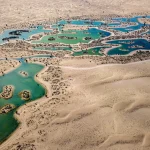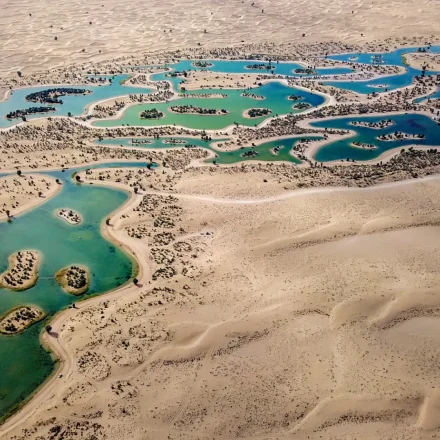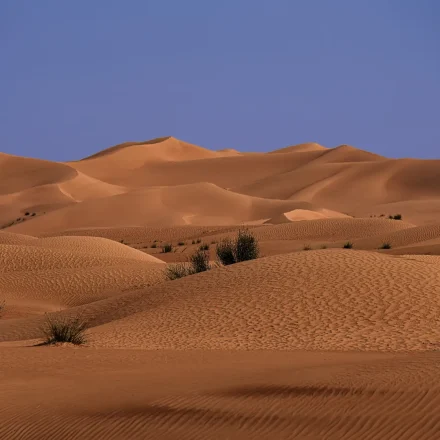

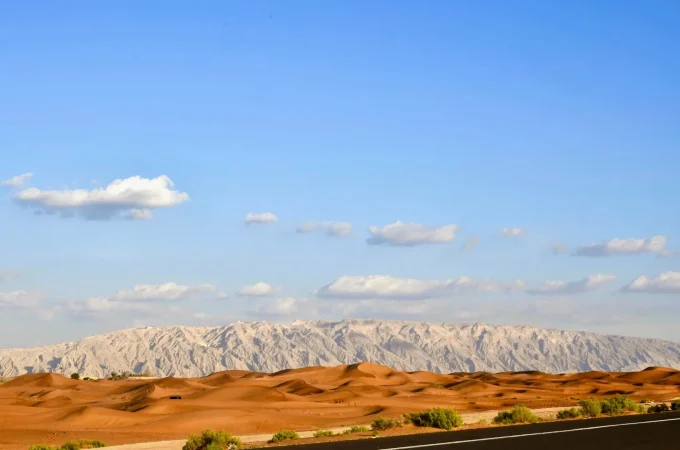
The Al Ain Desert is not a sea of dunes. It is gravel plain, seven oases fed by falaj channels, and the limestone wall of Jebel Hafeet. All of it sits about 90 minutes from both Dubai and Abu Dhabi. If the UAE’s other deserts are about sand, Al Ain is about how people, water and rock meet at the edge of the Hajar Mountains.
Table Of Content
- What Is the Al Ain Desert?
- What Is a Gravel Plain and Why Does Al Ain Have One?
- What Is Al Ain Oasis and Why Is It a World Heritage Site?
- How Does Jebel Hafeet Fit the Desert Landscape?
- What Can You Do at Jebel Hafit Desert Park?
- Does Al Ain Have Sand Dunes?
- How Do You Get to Al Ain and Is a Day Trip Possible?
- Where Can You Stay in the Al Ain Desert?
- When Is the Best Time to Visit Al Ain?
- Who Is the Al Ain Desert For?
- FAQ
- Is Al Ain really a desert?
- How far is Al Ain from Dubai?
- Is Al Ain Oasis free?
- Can you drive to the top of Jebel Hafeet?
- Can you camp at Jebel Hafit Desert Park?
What Is the Al Ain Desert?
The Al Ain Desert is the arid land around the city of Al Ain in eastern Abu Dhabi emirate. Here the gravel outwash of the Hajar Mountains meets the first dunes of the Rub’ al Khali. Al Ain itself sits at about 290 metres on the Oman border, roughly 160 km from Abu Dhabi and 120 km from Dubai. Indeed, it is called the Garden City because of its oases, parks and a seven-floor height limit on buildings. In short, the desert here comes in three forms: stony plains, irrigated oases and bare mountain. Most of the UAE’s sand deserts look nothing like it, which is the point of the trip.
What Is a Gravel Plain and Why Does Al Ain Have One?
A gravel plain is a desert surface of tightly packed pebbles and cobbles with little sand on top. For this reason, geologists call the pebble crust desert pavement. Wind and rain remove the fine grains and leave the stones behind. The stones then darken with a coat of desert varnish, as the Wikipedia summary of the process explains. In fact, around Al Ain the gravel comes from the mountains. Research published through the British Geological Survey describes the Hili Formation. It is a sheet of old alluvial fans more than 40 metres thick near Al Ain, thinning westward toward Abu Dhabi. Conglomerates and sands washed off the Hajar range make it up. In short, every flood for hundreds of thousands of years carried stones out of the mountains and spread them here.

Gravel plains also explain where the oases are. The ENHG Al Ain geology workshop notes that springs rise where bedrock ridges squeeze groundwater toward the surface. That is why a line of oases sits at the foot of the plain. For the wider picture of stony versus sandy deserts, read desert landforms and desert pavement.
What Is Al Ain Oasis and Why Is It a World Heritage Site?

Al Ain Oasis is a 1,200 hectare palm garden of about 147,000 date palms in the middle of the city. Meanwhile, two falaj systems, Al Aini and Dawood, water it. A falaj is a gravity channel, partly underground, that carries groundwater from the mountain foot to the fields. Indeed, the technique reached the area by the first millennium BC. UNESCO inscribed the oasis in 2011 as part of the Cultural Sites of Al Ain, a 17-component property. In addition, the listing covers the Hafit tombs, Hili and Bidaa Bint Saud. Entry is free. Also, an Eco-Centre near the Al Mutawaa gate explains the system. Flow in the channels is seasonal, so you may find them dry on a given day.
Al Ain has seven oases in all: Al Ain, Al Jimi, Al Qattara, Al Mutaredh, Al Muwaiji, Hili and the small Al Jahili. They are the clearest example in the Gulf of how people made a gravel desert habitable. Our guide to desert oases explains the hydrology.
How Does Jebel Hafeet Fit the Desert Landscape?
Jebel Hafeet is a limestone anticline about 1,240 metres high that rises some 900 metres straight out of the plain south of the city. It is the highest point in Abu Dhabi emirate and the second in the UAE, per Wikipedia. For example, the rock is shallow marine limestone and marl full of fossil corals and foraminifera. As a result, rain that falls on it feeds the gravel fans and, deep down, the falaj springs. So the mountain, the plain and the oases are one system.

The Jebel Hafeet Mountain Road climbs 11.7 km and about 1,200 metres through roughly 60 bends to a viewpoint near the summit. Since 1980, it has run three lanes wide. Meanwhile, at the base, Green Mubazzarah has hot springs at around 40 degrees, a small lake and lawns. Sunset from the top, with the city lights coming on across the plain, is the classic Al Ain view.
What Can You Do at Jebel Hafit Desert Park?
Jebel Hafit Desert Park opened in February 2020 along the eastern foot of the mountain as a nine-kilometre strip of gravel desert with marked trails. Activities, according to Visit Al Ain, include hiking, mountain biking with bikes on site, horse and camel riding and guided buggy tours. Pura Eco Retreat runs overnight camping. In addition, the park protects more than 500 Hafit-period beehive tombs, about 5,000 years old, excavated by Danish archaeologists from 1959, and Mezyad Fort. It opens daily from 8 am to 6 pm, and the camping season runs through the cooler months.
| Place | What it shows | Time needed | Vehicle |
|---|---|---|---|
| Al Ain Oasis and Eco-Centre | Falaj irrigation, date palms, UNESCO site | 1 to 2 hours | Any car; walk or buggy inside |
| Jebel Hafit Desert Park | Gravel plain, Bronze Age tombs, trails, camping | 2 hours to overnight | Any car to the gate |
| Jebel Hafeet Mountain Road | Limestone summit, sunset view over the plain | 1 to 2 hours | Any car |
| Green Mubazzarah | Hot springs, lake at the mountain foot | 1 hour | Any car |
| Hili Archaeological Park | Umm al-Nar tombs, Iron Age falaj | 1 hour | Any car |
Does Al Ain Have Sand Dunes?
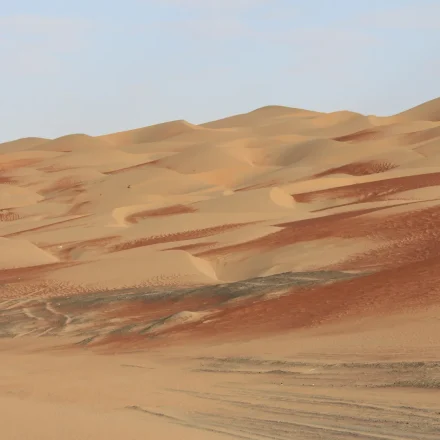
Yes, but at its edges. East and south of the city the gravel gives way to the first dunes of the Rub’ al Khali. The Department of Culture and Tourism’s self-drive route from Al Ain to White Sands crosses them over 157 km. However, inside the city and around the mountain you will see almost no loose sand. Visitors who want tall dunes should treat Al Ain as a contrast stop and combine it with Liwa or the Dubai dune belt. The UAE desert travel guide lays out that comparison.
How Do You Get to Al Ain and Is a Day Trip Possible?
From Dubai take the E66 (Dubai to Al Ain Road), about 160 km of road and roughly 1 hour 50 minutes. Likewise, from Abu Dhabi take the E22, about 160 km and an hour and a half. Overall, a day trip works: oasis in the morning, Hili or the desert park at midday, the mountain road for sunset, home by 9 pm. However, an overnight at the desert park or in the city turns a long day into a relaxed one. Every site in this article is reachable in a normal car; only the White Sands route needs a 4×4. For route planning across the country, see how to get to the UAE desert.
Where Can You Stay in the Al Ain Desert?
Choices are city hotels, the summit hotel on Jebel Hafeet, chalets at Green Mubazzarah and the camps inside Jebel Hafit Desert Park. In Desert Booker’s camp-type inventory (October 2026), the desert park’s eco retreat is the single verified Al Ain stay among ten UAE entries. A second resort on the city’s edge still awaits verification. Also, camping in the park is on booked plots with facilities; wild camping in the gravel plains is possible but offers no shade and no water.
When Is the Best Time to Visit Al Ain?
November to March. The city sits inland and higher than the coast, so winter nights are cooler and drier than in Dubai. Still, the summit can be windy and cold after dark. Summer afternoons exceed 40 degrees; the oasis shade and the mountain top are the only comfortable places then. For the mountain road, arrive about an hour before sunset. By contrast, for the oasis, go early, when the falaj is most likely to carry water and the light falls through the palms.
Who Is the Al Ain Desert For?
Al Ain suits travellers who have seen dunes and want to understand the desert instead. It shows how water is moved, how people farmed it for 5,000 years, and how a mountain makes a plain. It suits families, since every site has shade, toilets and short walks, and it suits cyclists and hikers in winter. However, it does not suit anyone whose goal is dune bashing or a tent among tall dunes. For the Bedouin side of the same history, read Bedouin culture in the UAE.
FAQ
Is Al Ain really a desert?
Yes. It receives very little rain and the ground is gravel and rock. However, oases, irrigation and a mountain make it look unlike the sandy deserts most visitors expect.
How far is Al Ain from Dubai?
About 160 km by road on the E66, roughly 1 hour 50 minutes by car.
Is Al Ain Oasis free?
Yes. Entry to the oasis and the Eco-Centre is free, and the site is open daily during daytime hours.
Can you drive to the top of Jebel Hafeet?
Yes. The 11.7 km mountain road is paved, three lanes wide and open to any car, with a viewpoint and a hotel near the summit.
Can you camp at Jebel Hafit Desert Park?
Yes, on booked plots or in serviced tents run by the park’s operator during the cooler months. The park itself is open daily from 8 am to 6 pm.