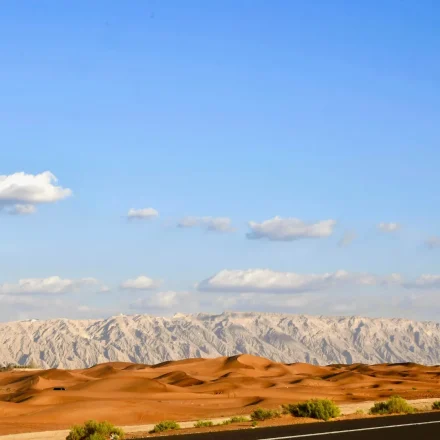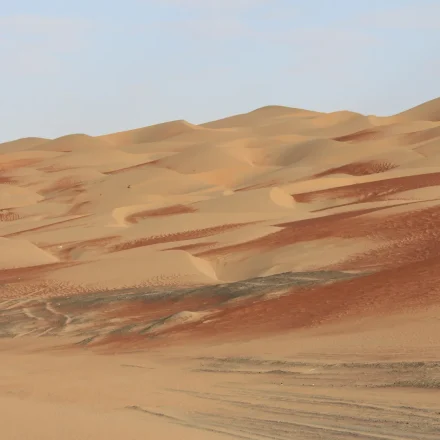

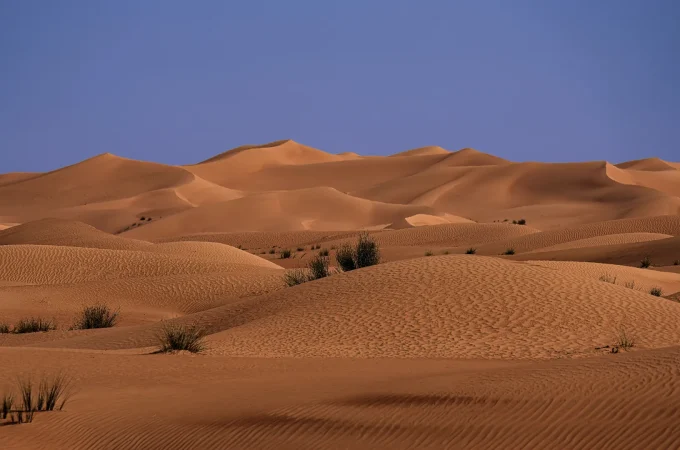
The Al Lahbab red dunes are the rust-coloured sand hills along the Dubai to Hatta road (E44). They begin about 45 to 50 km east of Downtown Dubai. Lahbab is where most Dubai desert safaris stage, so the dunes you see in safari photos are usually these. A normal car reaches the roadside; the dunes themselves need a 4×4, a tour or a rented buggy.
Table Of Content
- Where Exactly Are the Lahbab Red Dunes?
- Is Big Red in Lahbab or in Sharjah?
- How Do You Get to the Lahbab Desert, and Can You Drive Your Own Car?
- What Can You Do in the Lahbab Red Dunes?
- Do All Dubai Desert Safaris Go to Lahbab?
- What Is the Best Time to See the Red Dunes?
- Is Lahbab Suitable for Children, Beginners and Nervous Passengers?
- Can You Stay Overnight in the Lahbab Desert?
- What Else Is Nearby?
- FAQ
- How far is Lahbab from Dubai?
- Why is the sand red in Lahbab?
- Can you drive your own car to the red dunes?
- Is Big Red in Dubai?
- Is dune bashing safe for kids?
Where Exactly Are the Lahbab Red Dunes?
Lahbab (also spelt Lehbab) is a community of the Emirate of Dubai on the border with Sharjah. It covers about 97 square kilometres along the E44, according to Dubai Statistics Center figures cited by Wikipedia. The Lahbab red dunes are the sand belt that starts just past the Dubai Outlet Mall and runs east toward the Sharjah line. As a result, drivers reach them in about 45 minutes from Downtown or from Dubai International Airport. Meanwhile, the red colour comes from a thin coating of iron oxide on each sand grain. NASA’s Earth Observatory describes the same chemistry for the dunes of the wider Arabian Peninsula. In other words, the sand is rusty, and low sun makes the rust glow.
Is Big Red in Lahbab or in Sharjah?
Big Red is the single tall dune that off-roaders and buggy riders climb. It sits on the Sharjah side of the border at Al Badayer, a few minutes further along the E44. For example, Gulf News places it at the Sharjah and Dubai boundary and lists its location as Sharjah; What’s On puts it in Sharjah’s Central Region. So Lahbab and Al Badayer are two names for the Dubai and Sharjah ends of the same red-dune belt. Operators use “Lahbab”, “Big Red” and “Red Dunes” loosely, which is why the question comes up so often.

No surveyed height for Big Red exists in a public record; press estimates run from roughly 90 to 100 metres. For the geology behind why one dune grows taller than its neighbours, read how sand dunes form.
How Do You Get to the Lahbab Desert, and Can You Drive Your Own Car?
First, take the E44 (Dubai to Hatta Road) east from Dubai. After the outlet mall the dunes begin on both sides of the road, and roadside rental yards and parking areas mark the usual entry points. In other words, a normal car can park beside the road and at the rental yards; you cannot take it onto the sand. Indeed, the Dubai Police campaign that briefed 1,500 safari drivers in Lahbab in 2023 exists because this is the busiest off-road area in the emirate.
Driving your own 4×4 onto the dunes is legal. However, reckless driving that endangers others carries fines, black points and possible jail under UAE traffic law. Khaleej Times reported the penalties after Sharjah Police closed a nearby dune area following a fatal crash. Therefore first-timers should go with a guided tour or an experienced convoy. Deflate tyres before leaving the tarmac, carry a compressor, a shovel, tow straps and water, and never drive alone. Our guide to a self-drive desert safari covers tyre pressures and recovery in detail.
What Can You Do in the Lahbab Red Dunes?
In short, Lahbab is an activity desert. Almost every experience sold as a “Dubai desert safari” happens here or at Al Badayer. The list runs from dune bashing in a 4×4 to quad bikes and dune buggies rented from the roadside yards. Sandboarding on the steeper faces, a short camel ride and an evening camp with dinner and a show round it out. In addition, hot-air balloons launch from the Margham side on winter mornings.

| Experience | Typical length | Who it suits | Read first |
|---|---|---|---|
| Dune bashing (guided 4×4) | 30 to 45 minutes of driving | Adults and children over 3; not for back or heart conditions or pregnancy | Dune bashing: safety and what to expect |
| Quad bike or buggy | 20 to 60 minutes | Confident drivers; most yards set a minimum age of 12 to 16 | Dune buggy ride |
| Sandboarding | 15 to 30 minutes | Anyone who can walk up a dune | Is sandboarding hard? |
| Camel ride | 2 to 10 minutes at most camps | Families, photos | Camel riding |
| Evening camp | 3 to 4 hours | First-time visitors who want everything in one trip | See the section on camps below |
Do All Dubai Desert Safaris Go to Lahbab?
No. Lahbab and Al Badayer host the largest share. However, operators also run tours at Al Awir, Margham and inside the Dubai Desert Conservation Reserve, each with different sand and different rules. Because listings rarely name the site, ask the operator where the dune bashing happens and where the camp stands before you book. If you want red sand in your photos, the answer must be Lahbab or Al Badayer. Conservation-reserve tours, by contrast, trade red dunes for wildlife and a cap on vehicle numbers.
What Is the Best Time to See the Red Dunes?
Low sun is what turns the sand red in a photograph. The hour after sunrise and the hour before sunset give the strongest colour and the longest shadows on the dune crests. By contrast, midday light flattens everything to beige. Most evening safaris collect guests around 3 pm and return by 9 pm for this reason. Season matters too. October to April brings bearable afternoons and cold, clear nights. June to September, by contrast, pushes the sand surface past safe touching temperature by late morning.

Is Lahbab Suitable for Children, Beginners and Nervous Passengers?
Mostly yes, with limits. Operators on the Visit Dubai pass do not allow children under three in the vehicle during dune bashing. They also exclude pregnant guests and anyone with back or heart problems. Even so, children can still ride straight to the camp in a vehicle that skips the dunes. Also, motion sickness is common, so eat lightly beforehand and ask for the front seat. Beginners who want the sand without the speed can book a camp-only evening or a sunrise camel walk. For a family, a camp evening at Lahbab is an easy first desert night; for solitude, it is the wrong place.
Can You Stay Overnight in the Lahbab Desert?
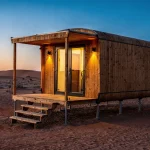
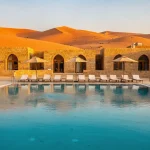
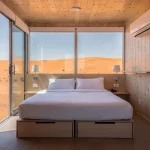
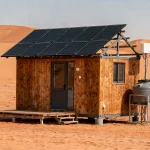
Yes, though most “camps” here are evening venues that close after dinner. A smaller number of permanent camps near Lahbab and at Al Badayer offer tents or rooms for the night. In Desert Booker’s camp-type inventory (October 2026), none of the ten verified UAE desert stays sits inside Lahbab itself. The nearest listed candidate is on the Al Badayer side and still awaits verification. So overnight choice around the red dunes is thinner than at Al Qudra or Liwa, and booking early in winter matters. The UAE desert travel guide compares the regions if you are deciding where to sleep.
What Else Is Nearby?
Fossil Rock (Jebel Mleiha) lies about 30 minutes further into Sharjah. It is a limestone outcrop scattered with marine fossils from the ancient Tethys Ocean. In addition, the Mleiha area holds tools dated to about 125,000 years ago. Better still, you can reach its car park in a normal car and walk up. Beyond that the E44 continues to Hatta and the Hajar Mountains. So Lahbab is a natural first stop on a day that ends in the hills.
FAQ
How far is Lahbab from Dubai?
About 45 to 50 km from Downtown Dubai or the airport along the E44, roughly 45 minutes without traffic.
Why is the sand red in Lahbab?
Each grain carries a thin coat of iron oxide. Low sun brings out the colour; at noon the same sand looks orange-beige.
Can you drive your own car to the red dunes?
To the roadside and rental yards, yes, in any car. Onto the dunes, only in a 4×4 with deflated tyres and experience, and never alone.
Is Big Red in Dubai?
No. Big Red stands at Al Badayer on the Sharjah side of the border, a few minutes east of Lahbab on the same road.
Is dune bashing safe for kids?
Operators generally allow children over three in the vehicle and bar pregnant guests and people with back or heart conditions. Younger children can skip the dunes and go straight to camp.