
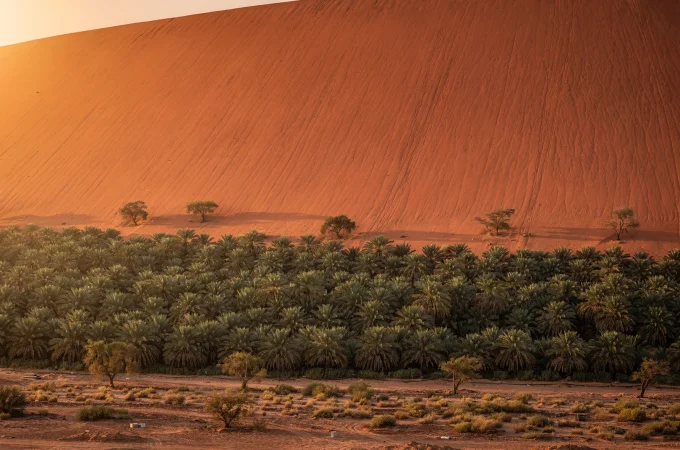
While the surrounding Rub al Khali is defined by bare sand, its northern edge holds something else entirely. A 100-kilometer crescent of date-palm plantations, historic forts and villages runs along it. This is Liwa Oasis, an old agricultural centre and the ancestral home of the UAE’s ruling families. Here is how to plan a visit to the place where water meets the dunes.
Table Of Content
- Overview of Liwa Oasis
- Landscape and Nature
- Climate
- Wildlife
- Flora
- Getting There and Logistics
- Experiences and Festivals
- Camp and Hotel Options
- Who Is This Oasis For?
- FAQ
- Do I need a permit to visit Liwa Oasis?
- Is Liwa suitable for a day trip?
- What is the historical significance of the oasis?
- Are there historical sites to visit?
- Can I buy local dates in Liwa?
- Is the Liwa Festival suitable for families?
Overview of Liwa Oasis
The oasis sits in the Al Dhafra region of Abu Dhabi and works as the main base for exploring the desert around it. Unlike the wild dunes further south, it offers paved roads, hotels, shops and working farms within easy reach of the sand sea.
Its defining feature is the shape. Liwa is not a single town but a long curved chain of more than 50 villages. The crescent follows an underground aquifer where groundwater sits close to the surface. Because of that water, date farming has continued here for generations.
Since the oasis runs nearly 100 kilometers from east to west, distances add up quickly. Driving between Mezaira’a in the centre and Hameem in the east, for example, can take up to an hour.
Landscape and Nature

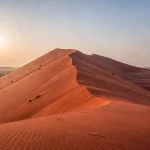
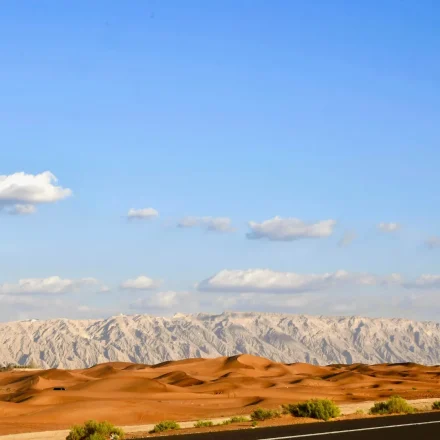
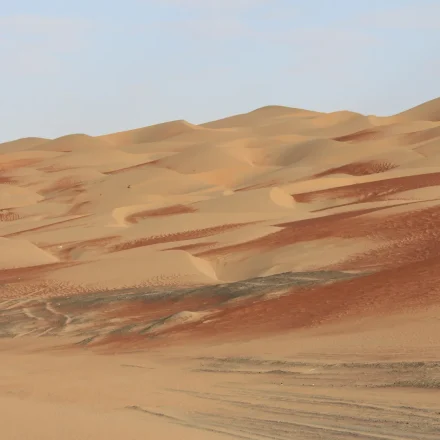
The appeal here is contrast. Green date-palm groves sit directly beneath towering red dunes, with almost no transition between them.
Tal Moreeb, the “Terrifying Hill”, is the most famous landform in the area. It rises roughly 300 meters at a steep 50-degree incline, which makes it one of the tallest road-accessible dunes anywhere. Climbing it on foot takes close to an hour of hard effort. By contrast, professional drivers scale it in under 30 seconds during winter racing events. Visit Abu Dhabi’s own page on Tal Moreeb sets out its role as the region’s centre for motorsport and winter adventure tourism.
Standing in the oasis, you can move between two environments in a few steps. First the cool shade of irrigated palm farms, then the dry heat of open sand. As a result, photographers rate the location highly.
Climate
The climate follows the usual desert pattern, with summers above 45 °C and pleasant winters. However, the palm groves create their own microclimate. The dense canopy blocks direct sun and drops ground temperature by several degrees compared with the open desert.
Winter nights cool quickly once the sun goes down. So if you plan to walk the villages or camp near the dunes in December or January, pack a windbreaker or a warm jacket.
Wildlife
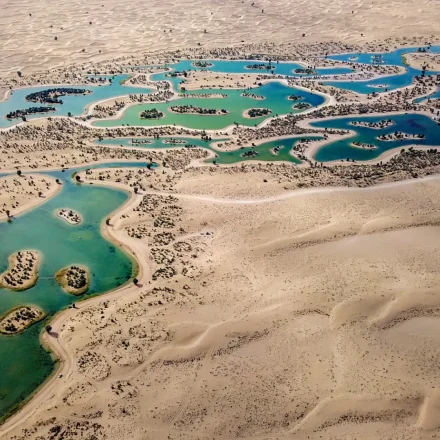
Standing water and farmland attract species you will not find deeper in the sand. Migratory birds on regional flyways use the irrigation ponds as stopovers. For more on desert fauna, see the desert animal adaptations guide and the Arabian Oryx profile.
Small lizards, insects and rodents are common around the farms. Larger mammals such as the sand gazelle usually stay near the outer fence lines instead.
Flora
Liwa is the best place in the country to see traditional date cultivation up close. Millions of palms draw on modern drip irrigation alongside historic wells. Harvest peaks in late summer, and local farms then supply markets across the UAE. For more on desert vegetation, see the Ghaf Tree guide and the desert plant adaptations guide.
Wild Ghaf trees also grow along the outer edges, where they survive by tapping deep underground water.
Getting There and Logistics

The drive to Mezaira’a is fully paved and simple. You do not need a four-wheel drive to reach the town, the farms or the base of Tal Moreeb.
| Logistics Category | Details & Specifications |
|---|---|
| Travel Time | 2 hours from Abu Dhabi city / 2.5 hours from Dubai |
| Road Infrastructure | Fully paved highways (E11/E45 or E65) to all major villages |
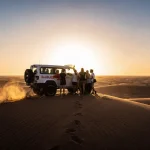
| 4×4 Requirement | Not needed for villages or the Tal Moreeb road; mandatory for dune driving |
| Emergency Facilities | Liwa Hospital and several pharmacies in Mezaira’a |
| Services & Fuel | ADNOC stations available; refuel before entering the sand roads |
| Connectivity | Strong 4G and 5G coverage throughout the oasis strip |
Experiences and Festivals

Most visitors come for three things: the historic mud-brick forts, the date farms and the motorsport at Tal Moreeb. The Liwa International Festival runs every winter, with drag races, camel racing, falconry displays and traditional markets.
Because the dates shift from year to year, check the official Abu Dhabi tourism calendar before booking. Outside festival weeks, the area stays quiet, which makes it well suited to camping and stargazing. For more options, see the Experience Hub.
Camp and Hotel Options

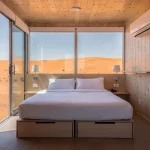
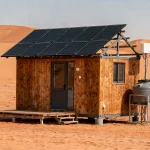
Accommodation runs from open desert campsites to luxury resorts. Camping at the base of the dunes costs nothing, although visitors must pack out all their rubbish.
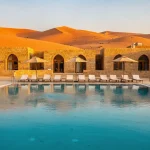
For commercial stays, Mezaira’a has mid-range hotels. At the top end, Qasr Al Sarab Desert Resort sits in the dunes near Hameem. To compare properties, see the Camp Hub.
Who Is This Oasis For?
Liwa suits families, heritage travellers and anyone who wants real desert without giving up fuel, food and medical services. In short, it is the most accessible entry point to Abu Dhabi’s desert landscape.
FAQ
Do I need a permit to visit Liwa Oasis?
No. The whole oasis crescent and the paved road to Tal Moreeb are open to the public without permits.
Is Liwa suitable for a day trip?
Yes. You can drive from Abu Dhabi, see the palm groves and Tal Moreeb, then return the same day. However, two days give you a far better experience.
What is the historical significance of the oasis?
It is the ancestral home of the Bani Yas tribe, from which the ruling families of Abu Dhabi and Dubai originate.
Are there historical sites to visit?
Yes. Several restored 19th-century watchtowers and forts, including Mezaira’a Fort and Dhafeer Fort, are open to visitors.
Can I buy local dates in Liwa?
Yes. Roadside stalls and local shops sell fresh dates, especially during the late-summer harvest.
Is the Liwa Festival suitable for families?
Yes. Alongside the motorsport, the festival runs family cultural zones, food trucks and traditional crafts.