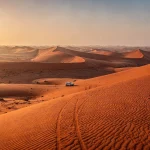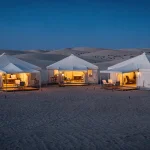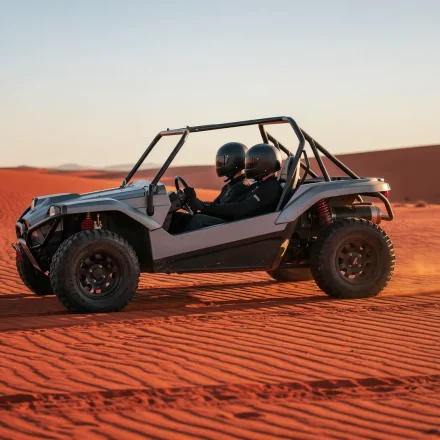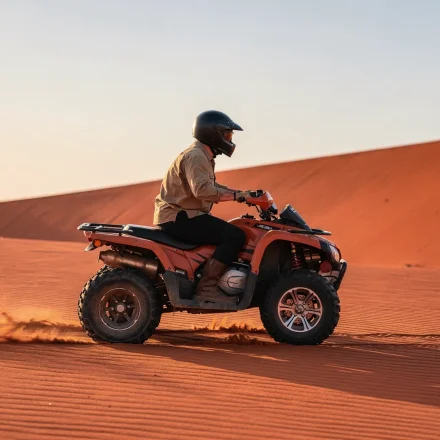


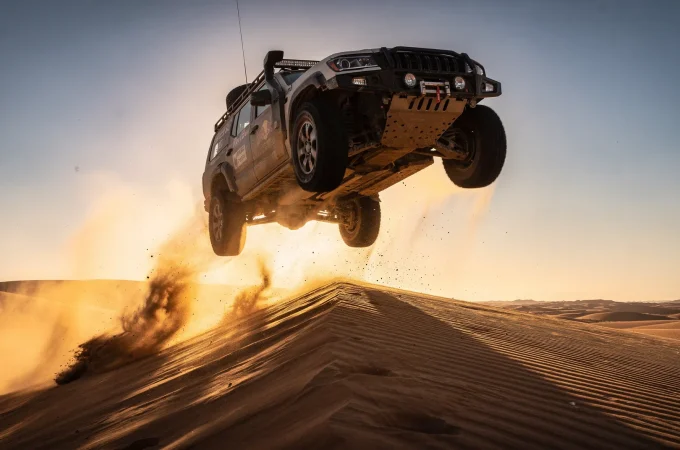
Dune bashing is the maneuver, not the mileage. A driver throws a 4×4 hard up, down and across a dune face at speed. Momentum and steering keep the vehicle from bogging in soft sand.
Table Of Content
- What Is Dune Bashing?
- How It Works: What a Session Actually Looks Like
- Skill Level and Fitness Requirements
- Safety and Precautions
- Equipment and What’s Provided
- Duration and Format Options
- Best Locations
- Best Season and Time of Day
- Who Is This For?
- FAQ
- Is dune bashing safe for kids?
- Will I get motion sick?
- How do I know if an operator is properly licensed?
If the operator’s pitch is “see the desert,” that is a Desert Jeep/4×4 Safari. If the pitch is the g-force of the drop itself, that is dune bashing. Operators sell the two under confusingly similar names all the time.
What Is Dune Bashing?
The term describes a driving technique before it describes a tour category. A driver accelerates up a dune’s steep face, then drops or slides down the back side. Sharp direction changes follow across the ridgeline.
Tire pressure, gear selection and momentum do the work here, not raw horsepower. A skilled driver drops tires to roughly 15 to 20 psi before entering soft sand. A fully inflated tire digs in instead of floating across the surface.
None of this asks anything of the guest. Your entire job is to hold on. Gulf tour operators built the activity in the 1990s by adapting standard 4×4 rental fleets for tourism. The name is now distinct enough from generic “desert safari” language that search engines treat it as its own experience.
How It Works: What a Session Actually Looks Like

A booking starts with pickup from a city hotel or a meeting point at the edge of the dune field. A short paved or graded-track transfer follows. At that transition point the driver drops tire pressure.
From there a session runs 20 to 45 minutes of continuous dune work. Expect steep climbs, brief airtime over crest lines and fast side-to-side traverses. Drivers usually break it into two or three runs, with a short stop between them so guests can reset.
Most half-day and full-day desert safari packages open with 30 to 45 minutes of dune bashing. Camel riding, sandboarding or a camp visit follows. Check the running order before booking, because listings often skip it.
Drivers follow a loosely repeated circuit rather than improvised terrain. Operators scout their working dune fields regularly as sand shifts season to season. A driver who knows a dune’s current shape delivers a smoother, safer ride.
Skill Level and Fitness Requirements
No driving skill or fitness threshold applies to the guest. The physical demand sits entirely on the operator’s side.
Motion tolerance is the one real filter. Sustained lateral G-forces and sharp drops sit close to a rollercoaster’s profile. Operators routinely steer pregnant guests toward the gentler jeep safari. The same advice goes to anyone with a back or neck condition, or anyone prone to motion sickness.
Children are welcome from a minimum age each operator sets. The real constraint is whether the vehicle takes a car seat or booster safely, not the child’s own capability.
Safety and Precautions

This section matters more than any other here, so it deserves blunt treatment.
Rollover risk is real. It happens almost exclusively with unlicensed operators running unmodified vehicles. Purpose-built 4x4s carry reinforced roll cages and desert-rated suspension.
On licensed tours, serious injury stays rare. The common complaints are motion sickness and minor bruising from a door or seatbelt during a sharp turn. Fastening the belt correctly prevents most of it.
In Dubai, regulated zones such as Al Lahbab require roll cages on every operating vehicle. Licensed operators must also register with the Roads and Transport Authority. They need a valid tourism trade license through the local e-permit system, as Khaleej Times reports.
Safari drivers complete a multi-day certified training course before they carry paying guests. Ask about that directly if an operator does not display its licensing.
Two concrete checks before booking. First, does the vehicle carry a visible tour-operator permit plate rather than a rental tag? Second, does the operator require seatbelts for the whole dune segment, not just the transfer? A five-point or lap-sash harness beats a standard three-point belt for this motion. Budget operators rarely upgrade.
Equipment and What’s Provided
Vehicle, driver and fuel come as standard. Guests bring nothing technical.
Bring sunglasses and a light scarf or shemagh-style head covering for an open-top or open-window vehicle. Dust kicks up hard on a dry run, even with the windows closed.
Operators usually hand out bottled water, though rarely without limit. Bring your own if the session sits inside a longer package.
Most regulated fleets now carry a GPS tracking unit. It lets a base office follow a convoy in real time. Guests never notice it, yet it cuts response time in a real emergency.
Duration and Format Options
Standalone sessions run 20 to 45 minutes. Bundled into a half-day or full-day safari, the dune segment forms one part of a 4 to 6 hour package.
Private-vehicle bookings cost more than shared ones. A shared vehicle might carry two or three unrelated groups. A private booking also lets the driver match intensity to the group. He can ease off for a nervous first-timer, or push harder for a group enjoying the drops.
Best Locations

Two destinations run dedicated sessions across the Desert Booker network. UAE covers both Liwa’s gateway dunes and the deeper Rub’ al Khali frontier. Oman runs it at Sharqiya Sands, alongside sandboarding and camel trekking.
Both share the same operating model: regulated fleet vehicles, trained drivers and a scouted working dune field. Vehicle style and driving intensity still vary noticeably between operators, even inside one country.
Best Season and Time of Day
Book late afternoon, roughly two to three hours before sunset. Photography is only part of the reason. Interior vehicle temperatures and driver fatigue both climb through the early afternoon in Gulf desert climates. Most operators visibly slow their driving in the hottest stretch, whatever the itinerary promises.
November through March is peak season regionally. Dune bashing still runs year-round, with adjusted timing in summer.
Who Is This For?
This suits thrill-focused travelers who want the physical sensation of the dunes rather than the scenery. If you want photographs and a slower look at the landscape, book the Desert Jeep/4×4 Safari instead.
Families with younger children, anyone with back or neck sensitivity and pregnant travelers do better with the gentler alternative. Sitting out this one segment of a bundled package also works.
FAQ
Is dune bashing safe for kids?
Most licensed operators set a minimum age, commonly around 5 or 6 depending on the seat. They also reserve the right to refuse a child the restraint system cannot secure properly. Check the operator’s own policy rather than assuming a blanket rule.
Will I get motion sick?
Some guests do. The lateral G-forces sit closer to an off-road rollercoaster than a normal car ride. If you are prone to motion sickness, ask for the front passenger seat. It reduces the whip effect the back rows feel.
How do I know if an operator is properly licensed?
Look for a government-issued desert-safari permit plate on the vehicle, not just a rental sticker. Ask directly about roll-cage certification and driver training before booking.