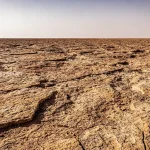


Badlands look almost otherworldly. Two erosion forces work on them at once, and nothing grows there to slow either one down. Badlands erosion is the fastest-acting process on the planet’s dry land.
Table Of Content
- How Badlands Form
- Where the Name Comes From
- Why the Absence of Vegetation Matters So Much
- Worked Example: Tabernas, Spain
- Why Tabernas Became a Film Set
- Other Notable Badlands Regions
- What Badlands Preserve
- What to Expect on the Ground
- Visiting Without Wrecking It
- Related Topics
- FAQ
- What causes badlands terrain?
- Where does the word badlands come from?
- Is Tabernas really the only desert in Europe?
- Why has Tabernas been used in so many films?
- How quickly can a storm change badlands terrain?
- Does anything live in badlands despite the barren look?
- Why do badlands matter to scientists?
- Why should visitors stay on marked trails in badlands?
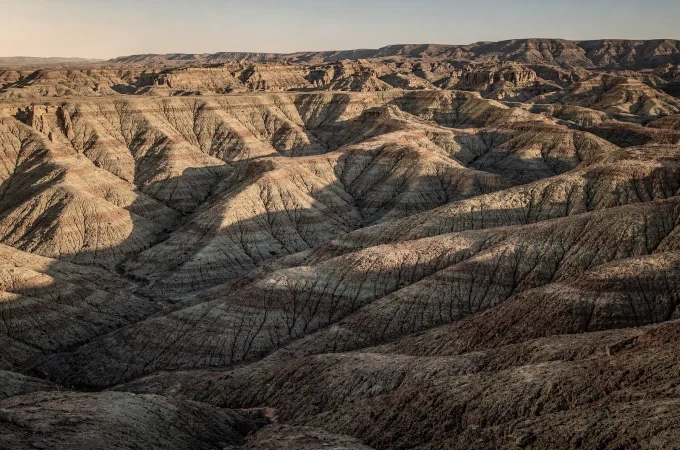
Low sun is the only time badlands show their full structure. Every one of those channels was cut by water.
How Badlands Form

Three conditions have to line up.
First, soft sedimentary rock. Often ancient marine deposits, laid down when the area sat underwater and only lightly compacted since.
Second, intermittent but intense rainfall. Not much of it, though violent when it arrives.
Third, almost no vegetation. Nothing to anchor the soil or slow the water once it starts moving.
Put those three together and wind and water carve deep gullies, sharp ridges and steeply eroded slopes. The same rock in a wetter, vegetated climate would need orders of magnitude longer to reach the same shape.
Where the Name Comes From
The word has two origins, and they arrived independently.
The Lakota called this terrain mako sica for hundreds of years, which translates directly as bad lands. Later, when French fur trappers crossed the same country, they called it les mauvaises terres à traverser, meaning bad lands to travel across.
The National Park Service traces the English name to the convergence of those two. Both groups reached the same verdict about the ground, though from very different starting points.
The term stuck. Geologists now use it worldwide for any terrain forming this way, regardless of continent.
Why the Absence of Vegetation Matters So Much

In a wetter climate, roots hold soil in place and slow runoff. Erosion still happens, but gradually, across long timescales.
Badlands work differently. Because nothing holds the surface, a rare storm can reshape a slope within hours.
More importantly, the new shape stays. No plant growth arrives afterward to soften the edges or fill the channel back in. A gully cut in one afternoon can still look freshly cut a decade later.
That combination of fast cutting and no healing is exactly what produces the sharp-edged look badlands are known for. Desert Rainfall Patterns and Flash Floods covers the storms doing the work.
Worked Example: Tabernas, Spain
The Tabernas Desert sits in Almería, in southern Spain, covering roughly 280 km².
It is widely described as Europe’s only true desert. That claim rests on Köppen classification rather than appearance. The lower basin scores BWh, hot desert, while higher ground scores BWk, cold desert. Spanish meteorological records put average annual rainfall for the area somewhere between 150 and 220 mm.
Notice that it looks nothing like the popular desert image, though. There are no dune seas at Tabernas. The terrain is badlands, which is precisely the point Desert Landforms makes about how varied desert ground actually is.
The rock itself is Miocene marine sediment, laid down when the basin sat beneath the sea. Wind and water have been cutting into it ever since.
Why Tabernas Became a Film Set
On camera, the terrain reads as the American Southwest.
That resemblance, combined with easy access for European crews and reliable sunshine, made Tabernas the default location for Western films from the 1950s onward. More than 300 productions have been shot there since.
Sergio Leone filmed his Dollars trilogy in the area. Several purpose-built sets from that era still stand, and some now operate as visitor attractions.
There is a small irony in all of it. Europe’s only desert spent decades pretending to be somewhere else.
Other Notable Badlands Regions
Three others are documented well enough to serve as reference points.
Badlands National Park in South Dakota formed from sediment deposited tens of millions of years ago. It now stands in horizontal bands of contrasting color, layer by layer.
Dinosaur Provincial Park in Alberta holds one of the richest concentrations of dinosaur fossils anywhere on Earth. The reason is directly geological, since the erosion carving the terrain keeps exposing new fossil material.
The Bardenas Reales in Navarre, northern Spain, shows the same process at smaller scale. It sits at the semi-arid edge rather than in true desert, which makes the contrast with Tabernas useful.
What Badlands Preserve
Erosion strips material away continuously, so it also exposes rock that would otherwise stay buried forever.
As a result, badlands are unusually productive for paleontology and sedimentology. A cliff face examined five years ago may show entirely different layers today, simply because that much material has since gone.
The trade-off becomes obvious once stated. Badlands hand researchers new evidence constantly, while destroying the old evidence at exactly the same rate.
What to Expect on the Ground
Deeply gullied, and often banded in horizontal stripes where sediment of different ages sits exposed.
Vegetation stays minimal and agriculture is essentially impossible. Those are the same qualities, of course, that make the terrain photograph so well.
Life persists anyway, just not visibly. Tabernas hosts a documented range of specialized soil bacteria and biocrust organisms despite its barren surface, and researchers use the site as a stand-in for other extreme low-vegetation environments.
For walking, expect loose footing and steep sides. Badlands slopes are soft by definition, which is why the terrain exists at all.
Visiting Without Wrecking It
Badlands slopes erode under foot traffic far faster than hard rock does. The material is loose and lightly bound, which is the entire reason this landform forms in the first place.
Established trails and viewpoints exist specifically to concentrate that damage in places able to absorb it.
Staying on them is therefore not a formality. Walking off-trail here accelerates erosion that would otherwise take years, and the marks stay visible for exactly the same reason a storm gully does. Nothing grows back over them.
Related Topics
Desert Landforms · Rock Deserts and Stone Pavements · Wadis and Flash Floods · How Deserts Form · World Deserts Atlas
FAQ
What causes badlands terrain?
Three things together: soft sedimentary rock, rare but intense rainfall, and almost no vegetation. Remove any one of them and the terrain does not form.
Where does the word badlands come from?
From two independent sources. The Lakota called the South Dakota terrain mako sica, meaning bad lands. French fur trappers called it les mauvaises terres à traverser, bad lands to travel across. The English name comes from both.
Is Tabernas really the only desert in Europe?
It is widely described that way, and the claim rests on Köppen classification rather than looks. The basin meets the formal desert threshold despite showing badlands rather than dunes.
Why has Tabernas been used in so many films?
The terrain resembles the American Southwest on camera, while sitting far closer to European production bases. That combination made it the default Western location from the 1950s onward.
How quickly can a storm change badlands terrain?
Within hours. One intense rainfall event on unprotected sediment can carve new gullies or reshape entire slopes, and nothing grows back to soften them afterward.
Does anything live in badlands despite the barren look?
Yes, though rarely at a visible scale. Specialized microbial communities and biocrust organisms persist in badlands soil, as soil-microbiology research at Tabernas documents.
Why do badlands matter to scientists?
Because constant erosion keeps exposing fresh rock. Paleontologists and sedimentologists get new material handed to them every season, which is why places like Dinosaur Provincial Park stay productive decade after decade.
Why should visitors stay on marked trails in badlands?
The sediment is soft and lightly bound, so footsteps cut into it much faster than they would on hard rock. Since nothing grows back, off-trail damage stays visible for years.