

Asia hosts the desert most people associate with cold rather than heat. It also holds one of the most densely populated desert regions on Earth.
Table Of Content
- The Gobi
- The Thar
- The Kyzylkum
- Why Asia’s Deserts Show Such Distinct Personalities
- How the Gobi’s Terrain Differs From Popular Desert Imagery
- Why This Region Rewards Comparison With Neighboring Deserts
- Related Topics
- FAQ
- Why is the Gobi classified as a cold desert rather than a hot one?
- Is the Thar Desert densely populated compared to other major deserts?
- How extreme is the Gobi’s temperature range compared to other deserts in this atlas?
- What does “Kyzylkum” actually mean?
- Is the Gobi mostly sand dunes like the Sahara?
The Gobi
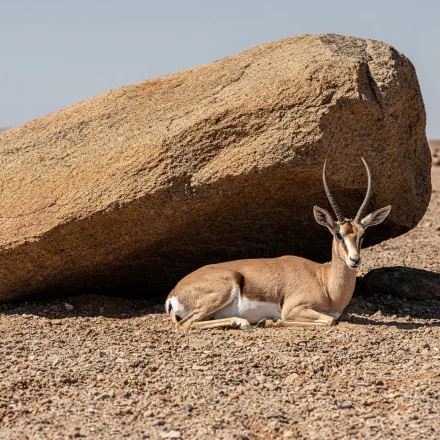
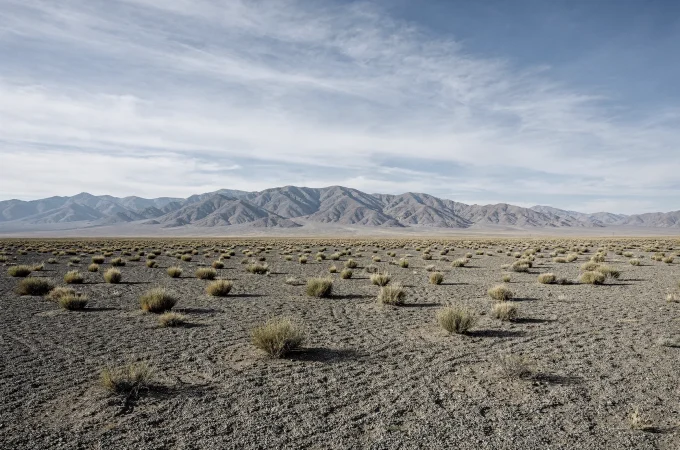
The Gobi spans southern Mongolia and northern China. It’s this Hub’s primary cold-desert worked example, explained mechanistically in Continental Interior Deserts: genuine winter snowfall, continental-interior distance from any ocean, and a partial rain-shadow effect from the Tibetan Plateau and Himalayas all combine. Britannica’s dedicated explainer on the Gobi’s cold-desert classification documents the scale of its temperature swing directly: average January lows near −40°C alongside average July highs near 45°C. That’s one of the largest annual temperature ranges of any desert in this atlas. Much of the Gobi is bare rock rather than sand, too, navigable by vehicle across large stretches.

The Thar
The Thar Desert, also called the Great Indian Desert, spans northwestern India’s Rajasthan region and parts of Pakistan. It stands out among major world deserts for supporting a comparatively dense human population, with long-established desert-adapted settlement and agriculture around its margins. That population density sets it apart from most other deserts in this atlas, where settlement tends to concentrate narrowly around oases rather than spread across a broader populated region.
The Kyzylkum
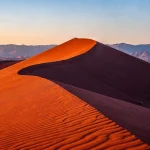
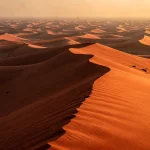
The Kyzylkum spans parts of Central Asia, sitting alongside semi-arid steppe terrain typical of the region. It’s a useful real-world example of how desert and steppe classifications sit adjacent to one another geographically, a distinction covered in Desert vs. Semi-Arid vs. Steppe. Its name translates roughly to “red sand,” a direct reference to the reddish dune terrain that dominates significant portions of the region.

Why Asia’s Deserts Show Such Distinct Personalities
Asia’s major named deserts each reflect a genuinely different combination of mechanisms, unlike the more uniformly hot subtropical deserts featured elsewhere in this atlas. Continental interior effects, rain shadow, and steppe-desert transition zones all play a role. That mix makes this continent one of the more varied entries in the entire atlas.

How the Gobi’s Terrain Differs From Popular Desert Imagery
Much of the Gobi is bare rock rather than sand. It more closely resembles the rock-and-gravel terrain found across parts of the Sahara than a classic dune sea. For travelers arriving with dune-field expectations shaped by more sand-dominated deserts, that comes as a genuine surprise.
Why This Region Rewards Comparison With Neighboring Deserts
Asia’s desert belt sits in close geographic and mechanistic proximity to the Middle East’s. Reading the two regions together gives a clearer picture of how one broad arid zone varies by local mechanism, terrain, and settlement pattern.
That same corridor also connects, at its western end, to the Sahara in North Africa. Together, the three regions form one of the largest continuous stretches of arid and semi-arid land on Earth, even though this atlas organizes them as separate entries for clarity.
Related Topics
Continental Interior Deserts · Desert vs. Semi-Arid vs. Steppe · The 5 Types of Deserts · World Deserts Atlas
FAQ
Why is the Gobi classified as a cold desert rather than a hot one?
Its classification traces to genuine winter snowfall and a low annual precipitation total, driven by its continental-interior distance from any ocean, not to daytime temperature alone. See The 5 Types of Deserts for the full breakdown.
Is the Thar Desert densely populated compared to other major deserts?
Yes, notably so. It’s frequently cited as one of the more densely populated desert regions globally, with established agricultural and settlement patterns around its margins.
How extreme is the Gobi’s temperature range compared to other deserts in this atlas?
It’s genuinely among the most extreme. Documented figures show average January lows near −40°C and average July highs near 45°C, a swing exceeding 80°C across the year.
What does “Kyzylkum” actually mean?
It translates roughly to “red sand,” referring directly to the reddish dune terrain that characterizes significant portions of the region.
Is the Gobi mostly sand dunes like the Sahara?
No. Much of the Gobi is bare rock, more closely resembling rock-and-gravel terrain than a sand sea. That comes as a genuine surprise for travelers expecting dune-field scenery similar to more sand-dominated deserts elsewhere.