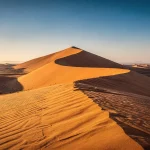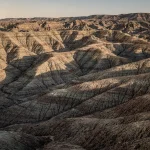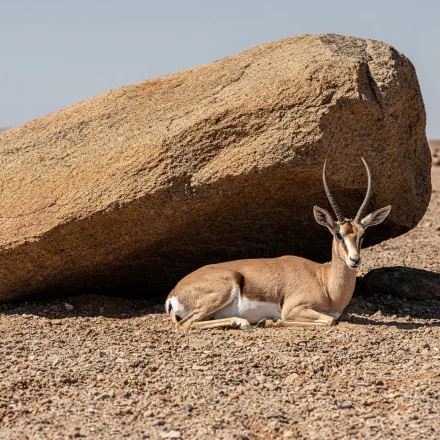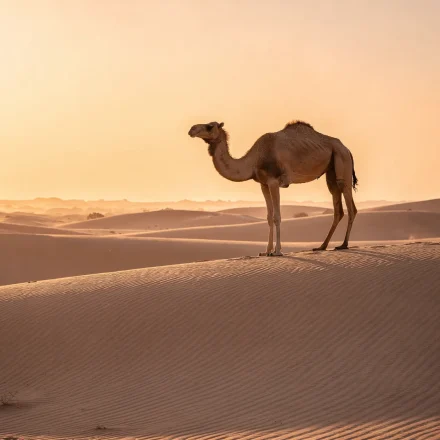


The desert landform most people picture least is the one covering the most ground. Desert pavement is also what most travelers actually spend a trip walking and driving across.
Table Of Content
- What Is a Hamada?
- What Is a Reg?
- What the Regional Names Mean
- How Desert Pavement Actually Forms
- The Modern Revision: Pavements That Grow Upward
- Desert Varnish
- Why This Terrain Dominates
- What to Expect on the Ground
- How This Connects to Other Landforms
- Related Topics
- FAQ
- Why does gravel protect the ground beneath it?
- Is hamada harder to travel across than sand dunes?
- Is desert pavement formed only by wind?
- Do hamada and reg describe the same surface?
- What is a stone pavement desert?
- Why does this terrain get so little attention compared to dunes?
- What is desert varnish?
- How old is a typical desert pavement?
What Is a Hamada?
A hamada is a barren rocky plateau. Either exposed bedrock, or a thin hard-packed surface carrying almost no loose sand.
Wind stripped away the finer, lighter material over long timescales and left only the larger rock behind.
Hamada usually turns up in the higher parts of a desert, where bedrock sits close to the surface. In those places there was never much loose sediment for wind to work with anyway.
What Is a Reg?

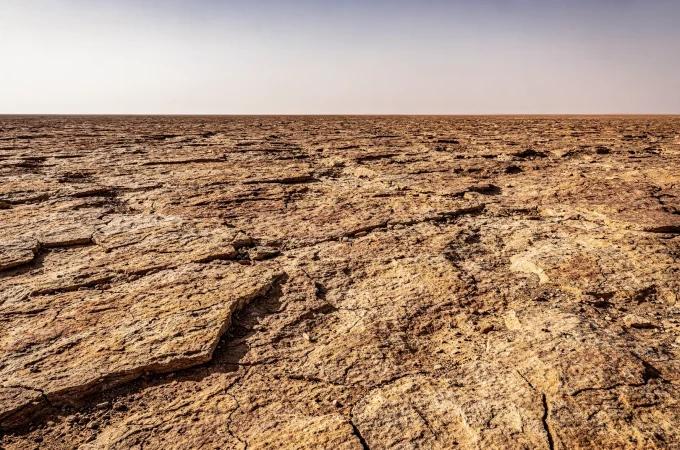
A reg is a plain covered in gravel and pebbles rather than bare rock.
Britannica describes desert pavement as a surface of angular, interlocking fragments of pebbles, gravel or boulders. Crucially, those fragments pack tightly enough to armor the ground and halt further erosion.
Many pavements sit on surfaces dating to the Pleistocene, meaning between 2.6 million and roughly 11,700 years ago. This is old ground.
In some places, evaporation draws moisture upward and precipitates calcium carbonate, gypsum and other salts between the pebbles. Those salts cement the surface into what geologists call a desert conglomerate.
The result becomes so smooth and so firmly packed that wind can no longer lift anything from it. In the Sahara, caravan routes have historically followed exactly these surfaces.
What the Regional Names Mean
The same surface type carries different names depending on where you stand.
Reg is the usual term across the western Sahara. Serir applies in the east. Australians call it gibber. In Central Asia the word is saï.
All four describe the same thing: closely packed rock fragments left on the surface after the fine material went elsewhere.
How Desert Pavement Actually Forms
The traditional explanation is wind deflation. Turbulent wind lifts and removes fine particles, the surface lowers, and coarse fragments concentrate as a protective lag.
That is genuinely part of the story. It is not all of it.
Britannica actually puts water first. Infrequent rain percolates into the ground and moves silt sideways and downslope beneath the surface. Gravel concentrates as a result, while wind removal at the surface enhances the effect.
So pavements come from wind and water working together, rather than wind alone.
Either way, the process runs opposite to the one that builds dunes. Deflation removes material, whereas accumulation adds it. That is why the two landforms often sit in different zones of the same desert, sometimes within sight of each other, as Sand Dunes and Ergs describes.
The Modern Revision: Pavements That Grow Upward
There is a third explanation, and it is stranger than either of the first two.
Work in the Cima volcanic field of California’s Mojave Desert found that some pavements never lowered at all. Instead, the stones stayed at the surface while windblown dust accumulated underneath them.
In that model the pavement is born at the surface and rides upward on an accreting layer of dust. Some Pleistocene pavements now sit as much as 20 centimeters above the ground level where they started.
A 2025 review in Earth Surface Processes and Landforms treats desert pavements as a record of exactly this kind of process, which is part of why they matter beyond scenery.
The honest summary, therefore: deflation, water sorting and dust accretion all produce pavements. Which one dominates depends on the site.
Desert Varnish
Look closely at a reg surface and many of the pebbles carry a dark, glossy coating.
Geologists call it desert varnish. It builds over centuries from windblown clay particles combined with manganese and iron compounds, and it only forms on rock that has sat undisturbed.
That makes varnish a rough clock. A heavily varnished surface has not moved in a very long time. Break a varnished stone open, meanwhile, and the interior is a completely different color from the skin.
Rock art across the Sahara and the American Southwest often works on exactly this principle. Scrape through the varnish and the pale rock beneath shows as a bright line.
Why This Terrain Dominates

Rock and gravel cover far more of the world’s desert area than dunes do.
Even the Sahara is majority hamada and reg. Its famous ergs, Erg Chebbi and the Grand Erg Oriental among them, make up a comparatively small fraction of the total footprint. Deserts of Africa maps that split.
Meanwhile, Desert Landforms puts all six landform types in context, while the USGS survey of desert geology goes deeper on the underlying processes.
What to Expect on the Ground
Flat or gently rolling, and visually stark rather than dramatically shaped.
Because the gravel lag resists erosion, this terrain stays genuinely stable over long timescales. A dune field, by contrast, reshapes with every season.
For vehicles that stability helps a great deal. Driving on hamada is far easier than driving on soft sand. However, the exposed rock runs uneven and sharp in places, so punctures are the practical worry here rather than getting bogged down.
For walking, sturdy soles matter more than they would on sand. Sharp gravel finds thin footwear quickly.
How This Connects to Other Landforms
Because rock and gravel desert is so extensive, it is usually the terrain surrounding everything more dramatic.
A salt flat or a desert oasis is normally reached after many kilometers of hamada or reg. Badlands sit at its edges, wherever softer sediment takes over.
Knowing that sets realistic expectations. A desert itinerary involves far more flat stable plain than the photographs suggest. Desert Rainfall Patterns and Flash Floods explains why the rare wet events crossing it matter so much.
Related Topics
Desert Landforms · Sand Dunes and Ergs · Badlands and Erosion Landscapes · How Deserts Form · World Deserts Atlas
FAQ
Why does gravel protect the ground beneath it?
Larger, heavier fragments resist being lifted by wind in a way that fine sand and dust cannot. Once a gravel lag forms, therefore, it shields the finer material underneath from further removal.
Is hamada harder to travel across than sand dunes?
Usually easier, since the surface stays firm underfoot and under tires. Even so, exposed rock runs uneven and sharp in places, which makes punctures the more common problem here.
Is desert pavement formed only by wind?
No. Britannica describes it as the combined effect of water and wind, since infrequent rain moves silt below the surface while wind removes fines above it. Research on the Mojave adds a third route, where dust accretes beneath stones that never moved.
Do hamada and reg describe the same surface?
Related but distinct. Hamada means bare rock plateau with minimal loose material, whereas reg and serir describe a surface specifically covered in gravel and pebbles. Both come from the same broad process, though they leave different-sized material behind.
What is a stone pavement desert?
It is a plain armored by a single layer of closely packed rock fragments. Once that layer forms, it protects everything below it, which is why such surfaces can stay stable for tens of thousands of years.
Why does this terrain get so little attention compared to dunes?
Almost entirely a matter of visual drama. Flat rock and gravel photograph far less dramatically than sweeping dune fields, even though they cover more total desert area worldwide.
What is desert varnish?

A thin, dark, glossy coating that builds slowly on exposed rock over centuries, formed from windblown clay combined with manganese and iron compounds. It marks how long a surface has stayed undisturbed.
How old is a typical desert pavement?
Older than most people expect. Britannica notes that many form on surfaces dating to the Pleistocene, so between 2.6 million and roughly 11,700 years ago.