
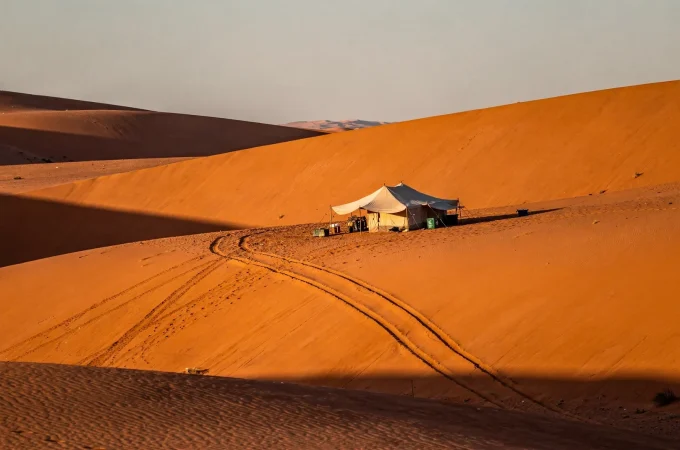
Desert camp prices can differ many times over between two camps in the same desert. The gap rarely comes from the sand itself. Instead, it comes from distance to the road, land and permit costs, the setting, the camp’s size and what each tent offers. This guide explains why two camps 50 km apart charge different rates.
Table Of Content
- Why Do Desert Camp Prices Differ So Much?
- Same Desert, Different Rates: What Our Sample Shows
- Distance From the Road and the Transfer
- Land, Permits and Protected Areas
- Setting: Dune Height, View and Privacy
- Camp Size and Who Else Is There
- Tents, Bathrooms and Power
- Desert Camp Prices: Cost Drivers Side by Side
- How to Compare Desert Camp Prices Fairly
- FAQ
- Why are some desert camps cheaper than others nearby?
- Do desert camp prices include transfers?
- Are camps inside reserves more expensive?
- Is a bigger camp a better deal?
- When are desert camp prices lowest?
Why Do Desert Camp Prices Differ So Much?
Desert camp prices differ because each camp pays different costs to run in a different spot. A camp beside a paved road pays little for transport. By contrast, a camp deep in the dunes trucks in water, fuel, food and staff by four-wheel drive.
The product also changes. One camp may sell shared tents and a set dinner, while another sells private tents with bathrooms. So two prices for “a desert camp” often describe two different stays. For the wider picture, see desert camp vs hotel.
Same Desert, Different Rates: What Our Sample Shows
Desert Booker’s own rate sample shows big gaps inside one desert. In Wahiba Sands in Oman, the highest tented camp rate we recorded was about 8 times the lowest. Similarly, among 7 dome camp rates in Wadi Rum, Jordan, the highest was about 3.6 times the lowest.
These camps share the same dunes and the same sky. Therefore, the difference comes from the factors below. The sample is small and mixes dates, so treat it as a direction, not a price list.
Distance From the Road and the Transfer

Distance from the road is the first cost driver. A camp at the edge of the dunes can use ordinary vehicles, grid power and mains water. Meanwhile, a camp an hour into the sand needs four-wheel-drive transfers for everyone and everything.
Those trips cost fuel, drivers and vehicle wear. As a result, remote camps often include the transfer in the rate, which raises the headline number. Before you compare, check how you reach each camp. Our guide on how to get to the UAE desert explains the usual access routes.
Land, Permits and Protected Areas
Land and permit costs vary a lot between sites. Camps inside reserves, such as the Dubai Desert Conservation Reserve, work under limits on numbers and activities. In addition, some protected areas charge visitors an entry fee.
Those limits can raise rates, because fewer guests share the fixed costs. On the other hand, they also keep the area quieter. So a higher rate inside a reserve often buys a calmer night.
Setting: Dune Height, View and Privacy
The setting carries a price of its own. Camps below tall dunes or beside famous views sell more nights in peak months. For example, the high dunes near Liwa Oasis draw steady demand in the cool season.
Privacy works the same way. Camps that space tents widely use more land and build longer paths. Therefore, a camp with ten spread-out tents usually costs more per night than one with forty tents in rows.
Camp Size and Who Else Is There

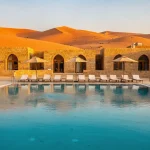
Large camps near the road often host evening safari groups who leave before midnight. They spread costs across hundreds of guests, so their overnight rates can be low. However, the evening can feel busy and loud.
Small camps, by contrast, host only overnight guests. Fewer guests pay for the same staff and supplies. As a result, their rates sit higher, yet the camp is quieter.
Tents, Bathrooms and Power
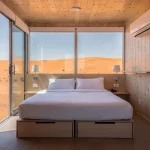
Within any camp, the tent itself moves the rate. A shared tent with a mattress costs least. Next come private tents with beds, then tents with an attached bathroom and air conditioning.
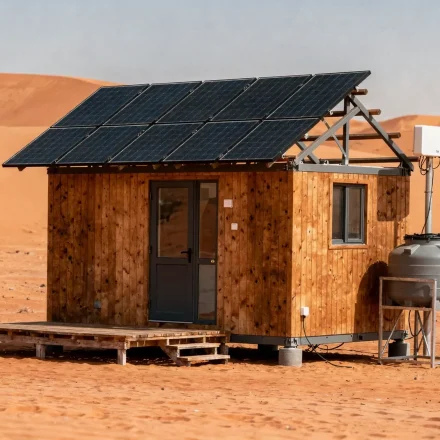
Power matters too. A camp on a diesel generator pays for fuel every night, so it may limit power after midnight. For the tented tier in detail, read what changes desert glamping prices.
Desert Camp Prices: Cost Drivers Side by Side
| Driver | Camp near the road | Camp deep in the dunes |
|---|---|---|
| Access | Ordinary car or bus | Four-wheel-drive transfer |
| Water and power | Often mains or grid | Trucked water, generator or solar |
| Land and permits | Lower, open land | Often reserve rules or concessions |
| Camp size | Large, evening groups | Small, overnight guests only |
| Noise in the evening | Higher | Lower |
| Typical rate | Lower | Higher |
How to Compare Desert Camp Prices Fairly
To compare desert camp prices fairly, turn each offer into one total for your group. First of all, add the transfer, dinner, breakfast and any reserve fee. Then match the tent type and bathroom.
Next, ask how many guests the camp hosts in the evening. Finally, check the distance from the road on a map. A cheaper camp near the highway and a dearer camp in deep dunes can both be fair value, because they sell different nights.
FAQ
Why are some desert camps cheaper than others nearby?
Mostly because of access, size and services. Camps near roads with many guests spread their costs further.
Do desert camp prices include transfers?
Many remote camps include them. Camps near the road often expect you to drive or book a separate transfer.
Are camps inside reserves more expensive?
Often, yes, because guest limits and fees raise costs. In return, the area is usually quieter.
Is a bigger camp a better deal?
Sometimes on price, but large camps can be busy in the evening. Small camps cost more but feel calmer.
When are desert camp prices lowest?
Usually midweek in the shoulder months. Holidays and cool-season weekends cost the most.