
Desert camping safety comes down to five risks: heat by day, cold at night, wildlife, getting lost and getting help in time. A licensed camp with trained staff handles most of them for you. Still, a few simple habits keep a night in the dunes safe. This guide covers each risk and what to do.
Table Of Content
- Desert Camping Safety: Is It Safe?
- Heat: The Biggest Daytime Risk
- Water: Drink Before You Feel Thirsty
- Cold Nights and How to Stay Warm
- Wildlife: Scorpions, Snakes and Camel Spiders
- Desert Camping Safety in Sun, Sand and Wind
- Driving and Getting Lost
- Getting Help: Phones, Signal and Emergency Numbers
- Desert Camping Safety Checklist
- FAQ
- Is it safe to sleep in a desert camp?
- Are there snakes and scorpions at desert camps?
- What are the signs of heat stroke?
- What is the emergency number in the UAE desert?
- Does my phone work in the desert?
Desert Camping Safety: Is It Safe?
Desert camping is safe for most travelers when they stay at an organised camp and follow staff advice. The real dangers are heat, dehydration and getting lost, not wild animals. In fact, most problems start when guests wander off alone or skip water.
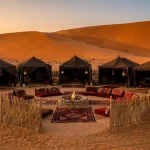
So the safest choice is a staffed camp with a clear site, lighting and a vehicle on hand. For what a camp usually provides, read what a desert camp is.
Heat: The Biggest Daytime Risk
Heat is the biggest risk in the desert, especially from late spring to early autumn. Too long in the sun can cause heat exhaustion, with heavy sweating, dizziness and nausea. If you notice these signs, move into shade, drink water and rest.
By contrast, heat stroke is a medical emergency. Warning signs include confusion, hot skin and fainting. In that case, cool the person at once and call an ambulance.
Water: Drink Before You Feel Thirsty
Dry desert air takes water from your body faster than you notice. Sweat dries almost at once, so you may not feel wet. As a result, dehydration can build quietly over an afternoon.
Drink small amounts often, even before you feel thirsty. Also carry water on every activity, including short dune walks. Dark urine and headaches are early signs that you need more.
Cold Nights and How to Stay Warm

Desert nights can turn cold, especially in winter. Clear skies let the day’s heat escape fast after sunset. So a warm afternoon can end in a chilly night.
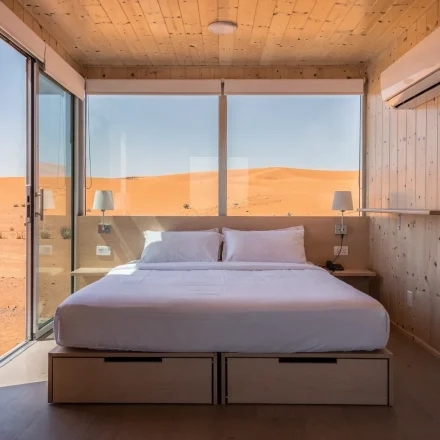
For that reason, pack a warm layer, socks and a hat for evenings. In addition, ask for extra blankets before staff go to bed. Heating is less common than many guests expect. Only 7 of the 50 desert properties in Desert Booker’s database mention any heating.
Wildlife: Scorpions, Snakes and Camel Spiders

Scorpions and snakes live in most deserts, yet bites at organised camps are rare. Most animals also hide by day and avoid people. For example, the Arabian horned viper buries itself in sand and strikes only when touched.
So shake out shoes and bags before use, and wear closed shoes after dark. Never lift rocks or reach into holes. If a sting or bite happens, keep the person still and calm, then call for medical help. Do not cut the wound or try to suck out venom.
Desert Camping Safety in Sun, Sand and Wind
Strong sun burns skin fast, even though the air may feel cool. Therefore, wear sunscreen, sunglasses and a hat during the day. A light scarf also protects your face from blowing sand.
Wind can lift sand into a dust storm with little warning. In the UAE, the National Center of Meteorology issues alerts for dust and strong wind. If a storm arrives, follow staff to shelter and cover your nose and mouth.
Driving and Getting Lost
Getting lost is a real risk, because dunes look alike from every side. Above all, never walk away from camp alone after dark. Also tell staff before any walk and take a phone and a torch.
Driving in sand needs skill and the right vehicle. If you plan a self-drive desert safari, go in convoy and carry recovery gear. Otherwise, let a trained camp driver take you in. For a wider plan, see our UAE desert travel guide.
Getting Help: Phones, Signal and Emergency Numbers
However, mobile signal is often weak in deep dunes. So save the camp’s phone number before you leave the city. Also ask staff where signal is strongest on site.
In the UAE, the official government portal lists 998 for ambulance, 999 for police and 997 for civil defence. Staff usually know the fastest route to a road where help can reach you. Meanwhile, keep any personal medicine within easy reach.
Desert Camping Safety Checklist
| Risk | What to do | What to ask the camp |
|---|---|---|
| Heat | Shade, water, rest at midday | Is there shade and cool water all day? |
| Cold nights | Warm layers, socks, hat | Are extra blankets or heaters available? |
| Wildlife | Closed shoes, shake out shoes | Is the site lit at night? |
| Sun and sand | Sunscreen, sunglasses, scarf | Is there a shaded seating area? |
| Getting lost | Never walk off alone | Which areas are safe to walk? |
| Getting help | Save the camp number | Where is the signal, and who has first aid? |
FAQ
Is it safe to sleep in a desert camp?
Yes, at a licensed camp with staff. The main risks are heat, cold and wandering off alone.
Are there snakes and scorpions at desert camps?
They live in the desert, but bites at organised camps are rare. Wear closed shoes and shake them out.
What are the signs of heat stroke?
Confusion, hot skin and fainting. In that case, cool the person and call an ambulance at once.
What is the emergency number in the UAE desert?
Call 998 for an ambulance, 999 for police and 997 for civil defence.
Does my phone work in the desert?
Often, but signal can be weak in deep dunes. So save the camp’s number before you leave.
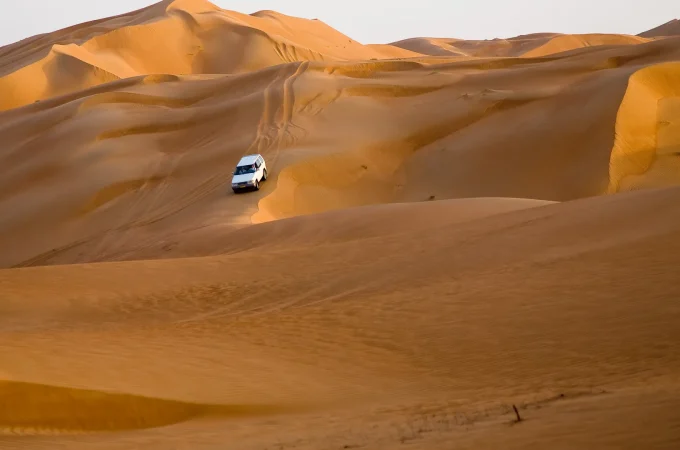
Photo credits: Featured image “Wahiba Sands (12)” by Andries Oudshoorn, Wikimedia Commons, CC BY-SA 2.0, cropped from the original.