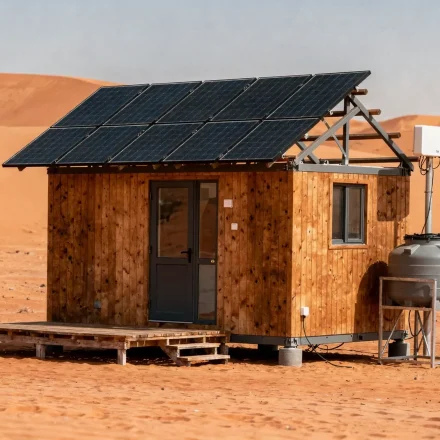
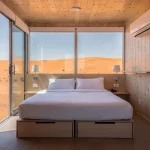

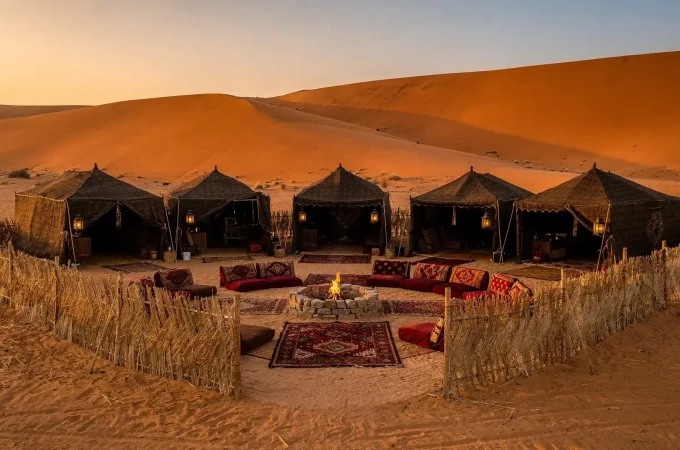
An overnight desert camp is a one-night stay in tents among the dunes. It usually includes a transfer, sunset activities, dinner, a night under the stars and breakfast. Most stays start in the afternoon, then end the next morning. This guide walks through what happens, hour by hour, so you know what to expect.
Table Of Content
- What Is an Overnight Desert Camp?
- Afternoon Pickup and the Drive Into the Dunes
- Arrival and Check-In at Camp
- Sunset Activities: Camels, Sandboarding and Photos
- Dinner and Evening Program
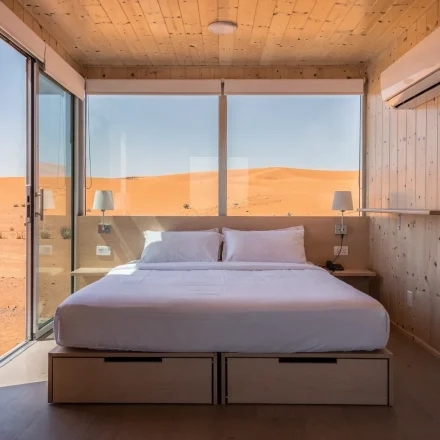
- Bedtime in an Overnight Desert Camp
- Sunrise and Breakfast
- Overnight Desert Camp Timeline at a Glance
- What to Pack for One Night
- FAQ
- What is included in an overnight desert camp?
- What time do overnight desert camps start?
- Is an overnight desert camp cold at night?
- Can I skip the dune bashing?
- Do overnight desert camps have bathrooms?
What Is an Overnight Desert Camp?
An overnight desert camp is a camp where guests arrive in the afternoon, sleep in tents and leave after breakfast. It differs from an evening desert safari, which returns guests to the city before midnight. So the overnight version adds the quiet hours, the night sky and the sunrise.
Most camps bundle the whole stay into one package. Typically, it covers the transfer, activities, dinner, the tent and breakfast. For the basics of camp life, read what a desert camp is.
Afternoon Pickup and the Drive Into the Dunes
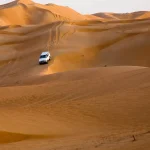
The stay usually begins with a pickup in a four-wheel-drive vehicle in mid-afternoon. In the UAE, drivers often head for desert areas such as the Dubai Desert Conservation Reserve or the dunes near Al Lahbab. Before entering the sand, they lower tyre pressure for grip.
Many packages include a short session of dune bashing on the way in. If you get motion sickness, ask for a gentle drive instead. Most drivers will skip the steep runs on request.
Arrival and Check-In at Camp
You reach the camp in the late afternoon, usually with time to settle before sunset. Staff often greet guests with Arabic coffee and dates, a custom rooted in Bedouin hospitality. Then someone shows you to your tent and explains the bathrooms, power and meal times.
So this is the moment to ask the practical questions. Where are the toilets? When does the generator switch off? Is there an extra blanket? Clear answers now make the night far easier.
Sunset Activities: Camels, Sandboarding and Photos

The hour before sunset is the busiest part of the stay. Most camps offer a short camel ride, sandboarding on a nearby dune and time for photos. Some add falconry displays or henna painting.
The light changes fast once the sun drops low. So walk up the nearest dune early, because the view from the crest is the best of the day. Afterwards, the sand cools quickly, and many guests return for a jacket.
Dinner and Evening Program
Dinner usually starts after dark, often as a barbecue or a buffet of grilled meat, rice, salads and bread. Many camps seat guests on low cushions around carpets, while others use tables. In addition, some run a short show, such as a tanoura dance or live music.
Vegetarian and other diets are often possible, but tell the camp when you book. After dinner, staff usually serve tea and keep a campfire going. Meanwhile, the larger group shows tend to wind down by late evening.
Bedtime in an Overnight Desert Camp
Bedtime in an overnight desert camp is quiet once the day guests leave. Lights dim, the generator may switch to a lower setting, and the sky fills with stars. In fact, 25 of the 50 desert properties in Desert Booker’s database lead with stargazing as a main experience.
Nights can turn cold in winter, even after a warm day. Therefore, ask for an extra blanket before the staff go to bed. Keep a torch by the bed, because the walk to a shared bathroom is dark.
Sunrise and Breakfast

In short, sunrise is the reward for staying the night. Staff often wake guests early so they can climb a dune and watch the light reach the sand. The air is still cool, and the desert is silent.
Breakfast follows soon after, usually eggs, bread, cheese, fruit, tea and coffee. Then the vehicles return you to the city by mid-morning. Some camps also offer a final short camel walk before you leave.
Overnight Desert Camp Timeline at a Glance
| Time of day | What usually happens | Tip |
|---|---|---|
| Mid-afternoon | Pickup and drive into the dunes | Ask for a gentle drive if needed |
| Late afternoon | Arrival, coffee, tent check-in | Ask about toilets and power |
| Before sunset | Camel ride, sandboarding, photos | Climb a dune early |
| After dark | Dinner and evening program | Share diet needs in advance |
| Late evening | Campfire, stars, bedtime | Request an extra blanket |
| Dawn | Sunrise from a dune | Bring a warm layer |
| Morning | Breakfast and return drive | Pack the night before |
What to Pack for One Night
Pack light, because most camps have limited space in the tent. Bring a warm layer, closed shoes for sand, sunglasses, sunscreen and a small torch. Also bring a power bank, since sockets can be few.
A scarf also helps against wind and sand. Finally, carry any medicine you need and a refillable water bottle. For the wider trip, see our guide to Bedouin culture in the UAE.
FAQ
What is included in an overnight desert camp?
Usually the transfer, sunset activities, dinner, a tent for the night and breakfast. Check the package details before you book.
What time do overnight desert camps start?
Most start with a pickup in mid-afternoon and end after breakfast the next morning.
Is an overnight desert camp cold at night?
In winter, yes. So bring a warm layer and ask for an extra blanket.
Can I skip the dune bashing?
Usually yes, because most drivers will take a gentler route on request.
Do overnight desert camps have bathrooms?
Yes, although simple camps share a toilet block, while glamping camps often have private bathrooms.